On this page
Three products that get sold as one
An FDA-approved pen has a label, a manufacturer, and a review that happened before the first legal sale. A compounded preparation uses a bulk drug substance under a different set of rules, and FDA does not approve it. A vial labeled for research use only is a third thing, often a substance FDA has not approved as a drug at all.
People land on the same websites for all three. This page only sorts the files this site has already written, and the agency pages those files cite. It does not add a seller list. The start here map is the longer index if you are not sure which file you need.
How a claim gets graded, including why a mouse paper does not become a human result, is methods. Individual study summaries live in the study library.
Compounded GLP-1 drugs
Compounded semaglutide vs Ozempic is the semaglutide file: the shortage dates, the salt forms FDA has called different active ingredients, and 990 adverse-event reports associated with compounded semaglutide as of May 31, 2026. FDA says that count is likely low, and that a report is not a rate.
Compounded tirzepatide is the other calendar. Tirzepatide injection went on the FDA shortage list on December 15, 2022. FDA resolved it on October 2, 2024, and reaffirmed that on December 19, 2024 after a court remand. On March 10, 2025 FDA said 503A enforcement discretion had ended. 503B discretion ran through March 19, 2025. A May 1, 2026 proposal to keep tirzepatide, semaglutide, and liraglutide off the 503B Bulks List was still a proposal when that page was checked on October 23, 2026.
The approved names those copies get compared with are on the GLP-1 drugs list. Mounjaro is the diabetes product. Zepbound is the weight and sleep-apnea product. The sleep-apnea trials are tirzepatide and sleep apnea. The weight comparison with semaglutide is semaglutide vs tirzepatide, and that trial used the approved-drug doses in the study. It does not describe a compounded vial.

On March 3, 2026 FDA announced 30 warning letters to telehealth companies. The agency said the main problems were claims implying the compounded product was the same as an approved GLP-1 drug, and branding that hid the compounder. A warning letter is FDA telling a specific company that a specific claim was false or misleading. It does not, by itself, rewrite the compounding statute. "Same as Mounjaro" is the kind of line those letters were about.
The report counts, more than 730 for compounded tirzepatide and 990 for compounded semaglutide as of May 31, 2026, are on FDA's unapproved GLP-1 page. The agency says many of the events look like events already known from the approved products, and that pharmacies which are not outsourcing facilities are not required to send reports, so the totals are likely undercounts.
 Read this next Compounded semaglutide vs Ozempic
Canada does not use the US 503A and 503B lists. An authorized Canadian product has a Drug Identification Number. The GLP-1 list has the DINs and monograph dates we checked for Ozempic, Wegovy, Mounjaro, and Zepbound. A US shortage decision does not create a Canadian compounding category.
Research-use-only vials
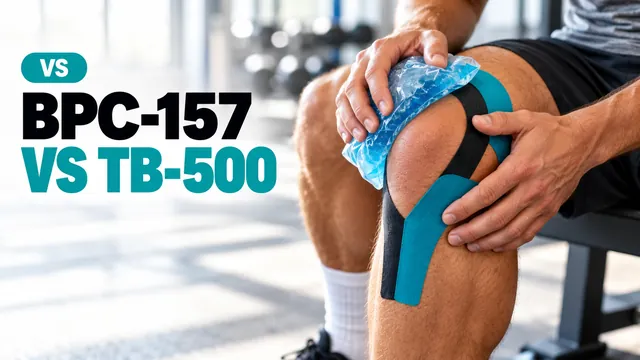
The phrase itself, and the five FDA letters dated August 24, 2026, are on research use only peptides. BPC-157 is the research-compound case, and it is not a GLP-1. Most of the research so far comes from laboratory and animal studies. That does not tell us whether it works in people.
Is BPC-157 legal? is the status page. FDA has not approved a drug containing it. It is not on the 503A Bulks List, not in Category 1, 2, or 3 on the May 14, 2026 categories document, and the nominations were withdrawn. FDA staff proposed on July 23, 2026 that the free base and the acetate stay off the list. Minutes were not posted, and this site does not repeat a vote count that is not in those minutes. A committee recommendation would not be a rule even if the minutes were up.
Update, October 28, 2026. HHS filed a draft enforcement-discretion policy, Federal Register document 2026-22192, covering BPC-157, TB-500, MOTS-c, KPV, Epitalon, and Semax. HHS says it does not intend to take action against a state-licensed pharmacy, a federal facility, or a licensed physician who compounds one of them when the conditions are met, including a prescription for a specific patient. FDA has not approved the six. The Bulks List is unchanged. The Secretary wrote that the aim is to discourage research-use-only peptides supplied by foreign manufacturers. The conditions are on the legal-status page. A research-use-only website is not one of the compounders that draft names.
Health Canada's April 9, 2026 advisory names BPC-157 among unauthorized injectable peptides and says a "for research use only" label does not make them legal. The May 2026 Type I recall RA-82047 covers BPC-157 powder sold as an unauthorized active ingredient. We did not find reliable interaction data in the sources reviewed. That does not mean there are no interactions.
The human record this site counts is fewer than 30 subjects across three uncontrolled pilots. The list is BPC-157 human trials. The profile is BPC-157. Athletes have a separate problem: the 2026 WADA list names it in class S0, prohibited at all times. That file, including the sanction, is is BPC-157 banned for athletes.
GHK-Cu is the other tissue-repair compound on this site, with small human studies of creams and gels and no published human trial of an injection. Status by route is is GHK-Cu FDA approved. The profile is GHK-Cu.
Labels, not shopping lists
The boxed thyroid warning on the semaglutide labels comes from rodent C-cell tumors. The labels say it is unknown whether that finding applies to people. The human studies we have are on the semaglutide thyroid warning. Kidney outcomes from FLOW are a different approved use, written up at semaglutide kidney outcomes.
Products sold as retatrutide outside a trial are covered on the retatrutide FDA approval article, which cites Lilly's medical answer and the reports already in that file. This page does not open a separate counterfeit gallery. Lilly's page, last reviewed August 4, 2026, says products offered to consumers as retatrutide are unlawful. That is a sponsor statement about an unapproved molecule, not a new FDA approval.
If you want the drugs that are still in trials, and not the ones already approved, that tracker is coming soon. If you want the approved names only, go back to the GLP-1 list.
Common questions
Is a compounded GLP-1 the same as the approved pen?
No. FDA says compounded drugs are not FDA-approved. The approved names are on the GLP-1 drugs list.
Did the March 2026 telehealth letters ban compounding?
They were 30 warning letters about sameness claims and hidden compounders. A letter is not a new statute. The shortage discretion for tirzepatide copies had already ended in March 2025, on the dates in the compounded tirzepatide page.
Does a research-use-only label make BPC-157 legal?
Health Canada's April 9, 2026 advisory says it does not, in Canada. The US compounding record is on is BPC-157 legal.
Where are the athlete rules?
On is BPC-157 banned for athletes. WADA class S0 is prohibited at all times. That is a sport rule, not an FDA approval decision.