Semaglutide and muscle loss: what the studies actually show
Semaglutide muscle loss is real, and it is widely misunderstood. In STEP-1, the pivotal trial of semaglutide 2.4 mg for weight management, a body-composition substudy found that total lean body mass fell by 9.7% at 68 weeks while total fat mass fell by 19.3%. Fat mass fell roughly twice as much in percentage terms as lean body mass.
That sounds alarming until two facts are added. First, lean body mass is not the same thing as skeletal muscle: the scan-based measurement includes water, organs, and connective tissue. Second, losing lean mass alongside fat happens in almost every effective weight-loss intervention, not only with semaglutide.
This article works through what the trials actually measured: the STEP-1 numbers, the parallel tirzepatide data, what happened to strength and physical function, the experimental bimagrumab combination, and what the evidence does and does not say about preserving lean mass.
How the trials measured it, and what "lean mass" means
The body-composition data come from DEXA scans: dual-energy X-ray absorptiometry, which divides body weight into fat mass, lean body mass, and bone mineral. When a trial reports a change in lean body mass, it is reporting a change in everything that is not fat or bone.
That matters because most discussion of this topic treats lean mass and muscle as the same word. They are not. A 2026 review in Metabolites states that DEXA-derived lean mass includes water, organs, connective tissue, and other non-fat compartments in addition to skeletal muscle, and that the appendicular lean soft tissue reading is only a proxy for actual contractile tissue. The same review calls the interchangeable use of "lean mass loss," "muscle loss," and "sarcopenia" in GLP-1 treatment discussion a conceptual mistake.
So every percentage below is a change in lean body mass as DEXA defines it, not a direct measurement of muscle lost. Keep that distinction in hand for everything that follows.
What STEP-1 found
STEP-1 was the pivotal semaglutide weight-management trial: 1,961 adults randomized 2:1 to semaglutide 2.4 mg once weekly or placebo for 68 weeks, both groups on a lifestyle program (Wilding et al., N Engl J Med 2021). The body-composition substudy measured 140 of those participants (95 on semaglutide, 45 on placebo) with DEXA scans at baseline and week 68. Mean weight in the substudy was 98.4 kg, mean body mass index 34.8, and 76% of participants were women.
At 68 weeks, body weight fell 15.0% on semaglutide versus 3.6% on placebo. Total fat mass fell 19.3%. Regional visceral fat, the fat around the abdominal organs, fell 27.4%. And total lean body mass fell 9.7%. Despite that decline, lean mass as a proportion of body weight rose by 3.0 percentage points, and the ratio of lean to fat mass improved: participants became a higher share of lean tissue because they lost a higher share of fat.
One transparency note on these figures. The substudy results were presented as a conference abstract at the Endocrine Society meeting in 2021 (J Endocr Soc 2021;5(Suppl 1):A16-A17), not as a full peer-reviewed paper. Absolute kilogram figures sometimes quoted online, implying roughly a 60% fat to 40% lean split of the weight lost, are back-calculations from these percentages rather than directly published results. The percentages above are the primary published figures.

Tirzepatide showed the same pattern
The parallel data for tirzepatide look much the same. In a body-composition substudy of SURMOUNT-1, 160 participants (124 pooled across tirzepatide doses, 36 on placebo) had DEXA scans at baseline and week 72. Weight fell 21.3% on tirzepatide versus 5.3% on placebo; fat mass fell 33.9% versus 8.2%; lean body mass fell 10.9% versus 2.6%. About 75% of the weight lost was fat mass and 25% was lean mass, the same proportions as placebo despite the much larger total loss, and the proportions held across sex, age, and weight-loss tertiles (Look et al., Diabetes Obes Metab 2025).
Two caveats. The study was funded by Eli Lilly and several authors are Lilly employees, so it needs independent replication before the proportions are treated as settled. And the published correction history is worth noting for anyone reading the paper: a correction fixed one figure's y-axis label from percent to kilograms, a reminder to read the corrected version rather than the original rendering.
Our semaglutide versus tirzepatide comparison covers the one true head-to-head trial and why the separate programs should not be compared directly; the body composition substudies are another case where each drug was compared with placebo, not with each other.
How that compares with other weight loss
The question the percentages raise is whether this lean-mass share is unusual, a side effect of these drugs, or just what weight loss looks like. A 2026 meta-analysis of 20 randomized trials with 15,782 participants (Eisa et al., Diabetes Obes Metab 2026) put numbers on it: lean mass made up 35.2% of weight lost with semaglutide, 25.4% with tirzepatide, 26.8% with liraglutide, and 26.2% with lifestyle interventions alone. The difference between incretin therapy and lifestyle was not statistically significant. When resistance training was added to lifestyle programs, the lean-mass share fell to 17.5%.
The honest reading: losing a meaningful share of lean body mass is what happens with substantial weight loss by any method, and the incretin drugs do not look like an outlier. That does not make the lean-mass loss unimportant; it places the concern correctly, as a property of large weight loss rather than a unique toxicity of these drugs. The meta-analysis did not compare the drugs head to head, so it cannot rank them against each other.
What happened to strength and function
Lean-mass numbers only matter if they change what people can do. The trial record on function is thinner than the record on composition, but it exists.
STEP-1 itself measured no grip strength or physical performance tests. What it did measure was patient-reported function. Across the STEP 1 through 4 trials, 51.8% of participants on semaglutide versus 28.3% on placebo reached a meaningful within-person change on the IWQOL-Lite-CT physical function scale in STEP-1, and 39.8% versus 24.1% on the SF-36v2 physical functioning scale. The nuance: a later systematic review found the average SF-36v2 gain, 1.71 points, fell below the 3.7-point threshold considered meaningful, so the functional benefit was statistically significant but modest (Rubino et al., Diabetes Obes Metab 2024; systematic review, PMCID PMC13448870).
The strongest direct muscle-function data in semaglutide users come from an observational cohort, not a trial. SEMALEAN followed 106 adults on semaglutide 2.4 mg for 12 months: lean mass fell about 3 kg by month 7 and then stabilized, handgrip strength improved by 4.5 kg at 12 months, and the prevalence of sarcopenic obesity fell from 49% to 33%. Without a control arm, that study cannot say how much of the change the drug caused versus the weight loss itself.
The older-adult data point the other way. In a 24-month retrospective cohort of older adults with type 2 diabetes, 220 on semaglutide and 212 matched controls, grip strength initially improved then declined in men and decreased throughout in women, while gait speed fell significantly in both sexes. Semaglutide dose, baseline muscle mass, and gait speed independently predicted muscle loss, with the strongest effects in people who already had sarcopenia at baseline (Wang et al., Drug Des Devel Ther. 2025; PMID 40631351). Age and starting muscle status appear to change the risk picture, which is exactly the kind of subgroup the main trials were not designed to answer.
The bimagrumab combination: BELIEVE
If lean-mass preservation is the goal, the most direct experiment so far paired semaglutide with a drug designed to protect muscle. Bimagrumab is an investigational antibody that blocks activin type II receptors, a signaling pathway that restrains muscle growth. The phase 2 BELIEVE trial randomized 507 adults with obesity to bimagrumab, semaglutide, the combination, or placebo for 48 weeks of randomized treatment (semaglutide was open-label), with an open-label extension to week 72 (Heymsfield et al., Nature Medicine 2026; ClinicalTrials.gov NCT05616013).
At 48 weeks, the high-dose combination produced 17.8 kg of mean weight loss, versus 14.2 kg with semaglutide alone, 9.3 kg with bimagrumab alone, and 3.3 kg with placebo. The body-composition results at 72 weeks are the striking part: the combination group lost 22.1% of body weight with 92.2% of it from fat mass. Semaglutide alone lost 15.7% with 75.6% from fat. Bimagrumab alone lost 10.8%, all of it fat, while lean mass actually increased 2.5%. Lean-mass change was minus 2.9% for the combination versus minus 7.4% for semaglutide alone; total fat mass fell 45.7% versus 27.8%, and visceral fat fell 58.2% versus 35.8%.
The limits are plain. This is one phase 2 trial, and bimagrumab is investigational and unapproved. The common side effects of bimagrumab were muscle spasms, diarrhea, and acne. The paper reported transient ALT increases with bimagrumab and persistent lipase elevation with semaglutide treatment, open tolerability questions for future trials. And function did not follow composition neatly: grip strength trended up with bimagrumab but not significantly more than with semaglutide, and there were no differences between groups on the SF-36 physical functioning scale at week 48. A better scan does not automatically mean a stronger patient.
What the evidence says about preserving lean mass
Two strategies get discussed for protecting lean mass during GLP-1-based weight loss: eating more protein and resistance training. The evidence for each sits at a different level.
The protein target most often quoted, roughly 1.2 to 1.6 grams per kilogram of body weight per day during active weight reduction, comes from a 2025 joint advisory published simultaneously in four journals (Mozaffarian et al.). That is expert consensus from four professional societies, not a randomized trial: the advisory notes it is unclear whether the target should be based on actual, adjusted, or ideal body weight, and it states plainly that increased protein intake alone is likely inadequate to preserve muscle mass without structured resistance or strength training. No randomized trial has tested this protein target specifically in GLP-1 users for lean-mass preservation.
For resistance training, no published randomized trial has tested a structured program specifically in semaglutide users. The closest trial combined exercise with liraglutide, an older GLP-1 drug: 195 participants randomized after an 8-week low-calorie run-in, and the combination arm did best on body-fat percentage, insulin sensitivity, and fitness, but the exercise was mostly aerobic and lean-mass preservation was not the primary endpoint (Lundgren et al., N Engl J Med 2021). A three-patient case series reported that people training with weights 3 to 5 days per week while on GLP-1 drugs preserved or gained lean soft tissue (Tinsley and Nadolsky, PMID 41122508); with three patients and no control group, that is hypothesis-generating, not evidence. In the 2026 meta-analysis, adding resistance training to lifestyle programs cut the lean-mass share of weight lost from 26.2% to 17.5%, which is the strongest pooled signal that training changes the composition of weight loss, though not in GLP-1 users specifically.
See the semaglutide research profile for the compound's full trial record and where the body-composition evidence sits inside it.
What the FDA label says
The regulatory position is a single quotable sentence. The Wegovy prescribing information, section 12.2 on pharmacodynamics, states: "Semaglutide lowers body weight with greater fat mass loss than lean mass loss." There is no boxed warning, warning, or precaution about loss of lean body mass, sarcopenia, or muscle loss anywhere in the label; the boxed warning covers thyroid C-cell tumors. The label indicates Wegovy only as an adjunct to a reduced calorie diet and increased physical activity, which is the closest the label comes to addressing the composition question.
The evidence grade, and why
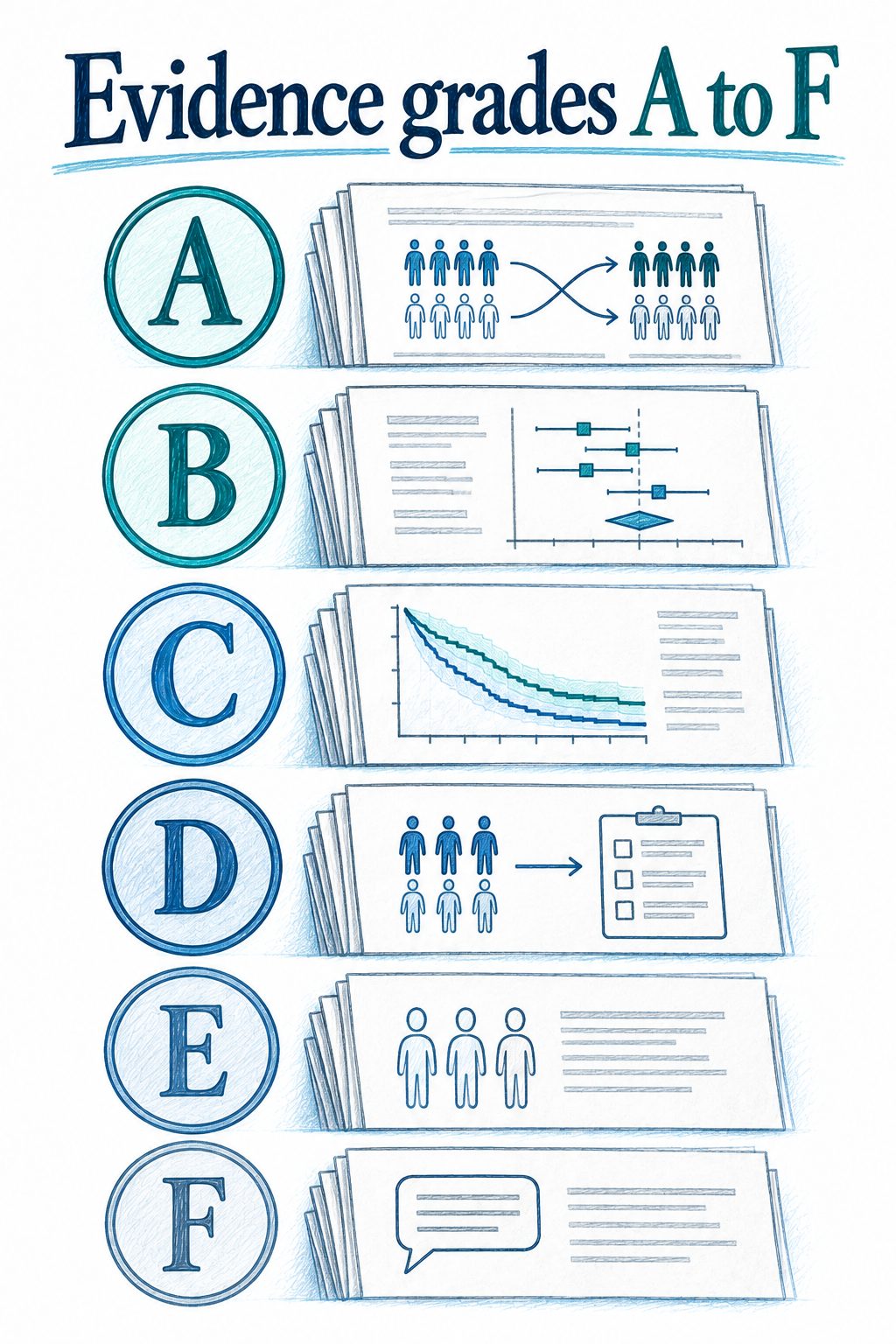
Grades below reflect the Evidence Research Team's internal evidence assessment, not formal rubric sign-off. Applying the site's grading approach to each finding separately:
Lean body mass declines alongside fat on semaglutide: moderate certainty. The STEP-1 substudy is a single small exploratory analysis (n=140) reported as a conference abstract, which limits it; the direction and scale are consistent with the 20-trial meta-analysis, which strengthens it.
The lean-mass share is similar to other weight-loss methods: moderate certainty. The Eisa 2026 meta-analysis pools 20 randomized trials with consistent proportions, but it did not compare drugs head to head.
Strength and physical function are preserved or improve: low certainty. The STEP function data are patient-reported and modest; the best grip-strength data come from an uncontrolled observational cohort; the elderly retrospective data point the other way.
The bimagrumab combination improves body composition: low certainty. One phase 2 trial of an investigational drug, with no functional advantage demonstrated and open tolerability questions.
Protein and resistance training preserve lean mass in semaglutide users: insufficient evidence. The protein target is expert consensus with no randomized trial behind it; no published trial has tested structured resistance training in semaglutide users.
See how we rank peptides by evidence strength and the weight management research topic for where semaglutide's trial record sits overall.
Bottom line
Semaglutide causes real lean body mass loss alongside larger fat loss: 9.7% lean versus 19.3% fat in the STEP-1 substudy, with roughly 60% of the weight lost as fat (a back-calculation from the published percentages, not a directly published result). That proportion looks like normal substantial weight loss, not a drug-specific toxicity, and "lean body mass" is not the same as muscle. Function data are modest but reassuring in younger trial populations and thinner in older ones. The bimagrumab combination is the most interesting composition experiment running, and it is phase 2 and investigational. What is still missing: a published peer-reviewed paper for the STEP-1 substudy itself, a randomized trial of resistance training in semaglutide users, and any functional advantage from the composition-improving combination.
Sources
Wilding JPH, et al. Impact of Semaglutide on Body Composition in Adults With Overweight or Obesity: Exploratory Analysis of the STEP 1 Study. J Endocr Soc. 2021;5(Suppl 1):A16-A17. DOI: 10.1210/jendso/bvab048.030. ENDO 2021 conference abstract; n=140 DXA substudy; weight -15.0% vs -3.6%, fat mass -19.3%, visceral fat -27.4%, lean body mass -9.7% at 68 weeks.
Wilding JPH, et al. Once-Weekly Semaglutide in Adults with Overweight or Obesity. N Engl J Med. 2021;384(11):989-1002. DOI: 10.1056/NEJMoa2032183. PMID 33567185. STEP-1: n=1,961, 2:1 randomization, 68 weeks, semaglutide 2.4 mg weekly plus lifestyle.
Look M, et al. Body composition changes during weight reduction with tirzepatide in the SURMOUNT-1 study of adults with obesity or overweight. Diabetes Obes Metab. 2025;27(5):2720-2729. DOI: 10.1111/dom.16275. PMID 39996356. DXA substudy n=160; weight -21.3% vs -5.3%, fat mass -33.9% vs -8.2%, lean mass -10.9% vs -2.6%; ~75% fat / ~25% lean of weight lost. Lilly-funded; correction DOI 10.1111/dom.70050.
Heymsfield SB, Aronne LJ, Montgomery P, et al.; BELIEVE trial investigators. Bimagrumab plus semaglutide alone or in combination for the treatment of obesity: a randomized phase 2 trial. Nature Medicine. 2026;32:869-882. DOI: 10.1038/s41591-026-04204-0. PMID 41772149. NCT05616013. n=507; 48 weeks double-blind plus extension to 72; combination -17.8 kg at 48 weeks; at 72 weeks -22.1% weight with 92.2% from fat; lean mass -2.9% combination vs -7.4% semaglutide alone.
Eisa M, et al. Lean Mass Changes With Incretin Therapy Versus Lifestyle Intervention: A Systematic Review and Meta-Analysis of Randomised Controlled Trials. Diabetes Obes Metab. 2026. DOI: 10.1111/dom.70666. PMID 41877354. 20 RCTs, n=15,782; lean-mass share of weight lost: semaglutide 35.2%, tirzepatide 25.4%, liraglutide 26.8%, lifestyle 26.2%, lifestyle plus resistance training 17.5%.
Santic R, et al. Lean Mass and Musculoskeletal Preservation in GLP-1-Based Obesity Treatment: Nutrition, Exercise, Supplementation, and Monitoring Strategies. Metabolites. 2026;16(6):364. DOI: 10.3390/metabo16060364. DEXA lean mass includes water, organs, connective tissue plus skeletal muscle; interchangeable use of "lean mass loss," "muscle loss," and "sarcopenia" is a conceptual mistake.
Mozaffarian D, et al. Nutritional priorities to support GLP-1 therapy for obesity. Joint advisory, 2025. PMID 40673264. Expert consensus proposing 1.2-1.6 g/kg/day protein during active weight reduction; protein alone likely inadequate without structured resistance training.
Lundgren JR, et al. Healthy Weight Loss Maintenance with Exercise, Liraglutide, or Both Combined. N Engl J Med. 2021;384:1719-1730. DOI: 10.1056/NEJMoa2028198. PMID 33951361. n=195; liraglutide 3.0 mg daily plus mostly-aerobic exercise; combination best on body-fat percentage, insulin sensitivity, and fitness.
Rubino D, et al. Effect of semaglutide 2.4 mg on physical functioning and weight- and health-related quality of life in adults with overweight or obesity: Patient-reported outcomes from the STEP 1-4 trials. Diabetes Obes Metab. 2024;26(7):2945-2955. DOI: 10.1111/dom.15620. PMID 38698650. STEP-1: 51.8% vs 28.3% meaningful change on IWQOL-Lite-CT Physical Function; 39.8% vs 24.1% on SF-36v2 Physical Functioning.
The Effect of Semaglutide on Quality of Life in Adults With Overweight or Obesity: A Brief Systematic Review and Meta-Analysis. PMCID PMC13448870. Four STEP trials, n=4,182; mean SF-36v2 Physical Functioning difference 1.71 points (95% CI 1.07-2.35), below the 3.7-point meaningful within-patient change threshold.
Wang et al. Semaglutide Therapy and Accelerated Sarcopenia in Older Adults with Type 2 Diabetes: A 24-Month Retrospective Cohort Study. Drug Des Devel Ther. 2025. DOI: 10.2147/DDDT.S531778. PMID 40631351. n=220 semaglutide, n=212 matched controls, 24 months; baseline sarcopenia prevalence 27.7%; grip strength initially improved then declined in men and decreased throughout in women; gait speed fell significantly in both sexes; dose, baseline ASMI, and gait speed independently predicted muscle loss.
Tinsley GM, Nadolsky S. Preservation of lean soft tissue during weight loss induced by GLP-1 and GLP-1/GIP receptor agonists: a case series. PMID 41122508. PMCID PMC12536186. Three patients training with resistance 3-5 days per week with protein 0.7-1.7 g/kg/day preserved or gained lean soft tissue; no control group, hypothesis-generating only.
SEMALEAN prospective cohort (semaglutide 2.4 mg, 12 months, n=106 completers). DOI: 10.1111/dom.70141. PMID 41068996. Lean mass -3 kg by month 7 then stabilized; handgrip strength +4.5 kg at 12 months; sarcopenic-obesity prevalence 49% to 33%. No control arm.
Wegovy (semaglutide) FDA prescribing information, section 12.2 Pharmacodynamics: "Semaglutide lowers body weight with greater fat mass loss than lean mass loss." No lean-mass warning in the label.
Keep reading
- Semaglutide research profile Every conclusion with its supporting studies, graded by evidence strength.
- Semaglutide vs tirzepatide: what the head-to-head trial found The one direct head-to-head trial, and why the separate trial programs cannot be compared directly.
- What happens when you stop taking semaglutide Weight regain is common after stopping. What the STEP extension and STEP 4 trials found.
- Peptides ranked by evidence strength Our compound profiles ordered by how strong the human evidence is.