On this page
This article works through what the trials actually measured: how AHI is scored, the results in each trial, what happened to weight and blood pressure, how the numbers compare with the one earlier trial in this drug class, what the US and Canadian approvals actually say, and what the program did not test.
What AHI means in tirzepatide sleep apnea research
Obstructive sleep apnea is a condition in which the upper airway repeatedly narrows or closes during sleep, interrupting breathing. A sleep study scores those interruptions as the apnea-hypopnea index: the number of apneas (full pauses) and hypopneas (partial reductions in airflow) during each hour of sleep.
The severity bands used in the approvals are plain. An AHI below 5 events per hour is in the normal range, 5 to 14 is mild, 15 to 29 is moderate, and 30 or more is severe. Moderate-to-severe disease, an AHI of 15 or more, is the population both SURMOUNT-OSA and the regulatory approvals cover. The trial participants started well above that line: mean AHI was 51.5 events per hour in trial 1 and 49.5 in trial 2, which is severe sleep apnea.
That starting point matters for reading the results. A fall of 25 events per hour is a large change, and it still leaves the average participant in trial 1 at roughly 26 events per hour, inside the moderate range. A big improvement and a remaining condition can both be true, and in these trials they usually were.
Excess body weight is a known driver of the condition: extra tissue around the upper airway makes collapse more likely during sleep. That is the link the trial program tested, a weight-loss medicine used in people whose sleep apnea sits alongside obesity.
What SURMOUNT-OSA tested: two trials, one question
SURMOUNT-OSA was a pair of phase 3, double-blind, randomized, controlled trials run under one protocol (Malhotra et al., N Engl J Med 2024; ClinicalTrials.gov NCT05412004). Trial 1 enrolled 234 adults who were not receiving positive airway pressure (PAP) therapy at baseline. Trial 2 enrolled 235 adults who were receiving PAP therapy. Together, 469 participants.
Everyone enrolled had moderate-to-severe obstructive sleep apnea and obesity. Mean body mass index was 39.1 in trial 1 and 38.7 in trial 2. Participants were assigned 1:1 to the maximum tolerated dose of tirzepatide (10 mg or 15 mg once weekly, as researchers administered it in the study) or placebo for 52 weeks, and both groups received a lifestyle program for weight reduction.
The primary endpoint was the change in AHI from baseline to week 52, measured by polysomnography, a full overnight sleep study. The prespecified secondary endpoints included the percent change in AHI and body weight, sleep apnea-specific hypoxic burden (a measure of how far and how long blood oxygen falls during events), patient-reported sleep impairment and disturbance, the inflammation marker high-sensitivity C-reactive protein (hsCRP), and systolic blood pressure.
One reading note applies to every number that follows. All results below are the treatment-regimen estimand values from the paper, the analysis that follows participants as randomized. Lilly materials also quote higher efficacy-estimand values for the same trials (an AHI fall of 27.4 and 30.4 events per hour); those are a different analysis of the same data, not different results.
One funding note applies to everything that follows. Eli Lilly, which sells tirzepatide, funded the program, and company employees were among the authors. That is standard for approval trials, and it is a reason to want independent replication, not a reason to discard randomized data.
Trial 1: tirzepatide sleep apnea results without PAP therapy
In trial 1, participants were not using PAP therapy, the standard device treatment that holds the airway open with pressurized air. At week 52, mean AHI fell by 25.3 events per hour on tirzepatide (95% confidence interval, -29.3 to -21.2) and by 5.3 events per hour on placebo (95% CI, -9.4 to -1.1). The estimated treatment difference was 20.0 events per hour (95% CI, -25.8 to -14.2; P<0.001).
In percentage terms, AHI fell 50.7% on tirzepatide versus 3.0% on placebo. About 61.2% of tirzepatide participants cut their AHI by at least half, versus 19.0% on placebo.
The remission result needs its definition attached. The trial counted a participant as reaching disease resolution if the AHI fell below 5 events per hour, or into the 5 to 14 range with an Epworth Sleepiness Scale score of 10 or less, meaning no excessive daytime sleepiness. By that definition, 42.2% of the tirzepatide group reached remission or mild, non-symptomatic sleep apnea at 52 weeks, versus 15.9% on placebo.

Read that from the other side as well: 57.8% of the tirzepatide group did not reach that threshold. The drug moved a severe condition down by roughly half on average. For many participants, what remained was still a condition that sleep clinicians treat.

Trial 2: tirzepatide sleep apnea results alongside PAP therapy
Trial 2 asked a different question: does the drug still change the underlying apnea severity in people already using PAP? At week 52, mean AHI fell by 29.3 events per hour on tirzepatide (95% CI, -33.2 to -25.4) and by 5.5 events per hour on placebo (95% CI, -9.9 to -1.2). The estimated treatment difference was 23.8 events per hour (95% CI, -29.6 to -17.9; P<0.001).
AHI fell 58.7% on tirzepatide versus 2.5% on placebo, and 72.4% of tirzepatide participants cut their AHI by at least half, versus 23.3% on placebo. Using the same resolution definition as trial 1, 50.2% of the tirzepatide group reached remission or mild, non-symptomatic sleep apnea, versus 14.3% on placebo.
The point of trial 2 is easy to miss. These participants already had a working treatment for the nights they used it. Their AHI still fell by nearly 30 events per hour on the study measurements. Those measurements were taken off PAP: per the trial design, participants suspended PAP for 7 days before the sleep-study assessments at baseline and at week 52. So the fall reflects the airway itself becoming more stable, not the machine doing the work on the measurement night.
What trial 2 does not show is that anyone can stop PAP. No group in SURMOUNT-OSA was assigned to drop PAP and rely on the drug instead, and the program ran no head-to-head comparison against PAP. Guidance from the American Academy of Sleep Medicine frames tirzepatide as part of comprehensive sleep apnea care alongside PAP, oral appliance therapy, or surgery as appropriate, not as a replacement for PAP.

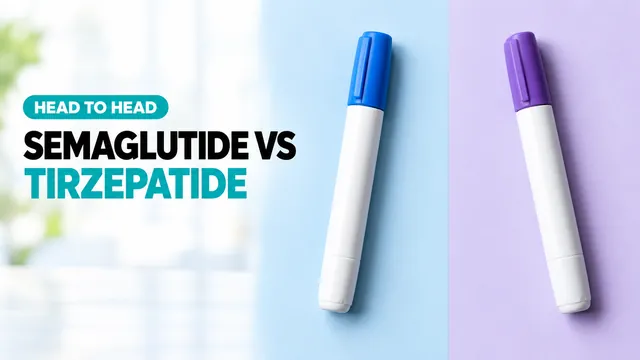
Our semaglutide versus tirzepatide comparison covers the one true head-to-head weight-loss trial between the two drugs; no equivalent head-to-head trial exists for sleep apnea, because semaglutide has never been put through a dedicated phase 3 sleep apnea program.
What happened to weight, blood pressure, and inflammation markers
Weight fell with the AHI. At 52 weeks, body weight fell 17.7% on tirzepatide versus 1.6% on placebo in trial 1, and 19.6% versus 2.3% in trial 2. The trial paper reports significant improvements on tirzepatide versus placebo for every prespecified key secondary endpoint: percent change in AHI and body weight, hypoxic burden, patient-reported sleep impairment and disturbance, hsCRP concentration, and systolic blood pressure.
 Read this next Semaglutide vs tirzepatide: what the head-to-head trial found
Two of those secondaries carry numbers worth separating out. hsCRP, an inflammation marker linked to cardiovascular risk, fell 40.1% in trial 1 and 48.2% in trial 2 on tirzepatide, in each case by more than on placebo. Systolic blood pressure, measured at week 48, fell 9.5 mm Hg on tirzepatide versus 1.8 mm Hg on placebo in trial 1, and 7.6 mm Hg versus 3.9 mm Hg in trial 2.
Keep the category of these results straight. Blood pressure, inflammation markers, and hypoxic burden are risk markers and symptom measures. SURMOUNT-OSA was not designed or powered to count heart attacks, strokes, or deaths, and it reported none as an outcome. Better markers after one year are encouraging. They are not proof of fewer cardiovascular events in this population.
On mechanism, the honest summary is short. The study was built on the idea that reducing excess adiposity, a known cause of airway collapse in sleep, would reduce the AHI, and the weight and AHI results moved together. The trials did not isolate any weight-independent effect of the drug on breathing control, so claims about a direct airway or brainstem action go beyond what this program measured.
How the tirzepatide sleep apnea results compare with earlier research
Three comparisons put the SURMOUNT-OSA numbers in scale. Each item below gets its own evidence, because the programs differ in drug, size, and duration and cannot be ranked like a single trial.
Tirzepatide, SURMOUNT-OSA (2024). Two phase 3 trials, 469 adults with moderate-to-severe sleep apnea and obesity, 52 weeks. AHI fell 25.3 and 29.3 events per hour versus 5.3 and 5.5 on placebo, body weight fell 17.7% and 19.6%, and 42.2% and 50.2% of participants reached remission or mild, non-symptomatic apnea. Those treatment differences, 20.0 and 23.8 events per hour, are far larger than the 6.1 events per hour in the liraglutide trial covered next, and this is the program that led to a sleep apnea approval.
Liraglutide, SCALE Sleep Apnea (2016). The one earlier dedicated trial in this drug class tested liraglutide, an older daily GLP-1 medicine, in 359 adults with obesity and moderate or severe sleep apnea who were unwilling or unable to use CPAP (Blackman et al., Int J Obes 2016; PMID 27005405). Over 32 weeks, AHI fell 12.2 events per hour on liraglutide versus 6.1 on placebo, a treatment difference of 6.1 events per hour, and weight fell 5.7% versus 1.6%. A post hoc analysis found that greater weight loss tracked with greater AHI improvement. Liraglutide was never approved for sleep apnea.
Semaglutide: no dedicated sleep apnea trial. Semaglutide has one of the largest trial records in medicine, for weight management, cardiovascular outcomes, and kidney outcomes. None of it is a dedicated sleep apnea trial with AHI as the primary endpoint, and semaglutide carries no sleep apnea approval in the US or Canada as of October 2026. Anything said about semaglutide and sleep apnea today rests on indirect evidence from weight-loss trials, not on a SURMOUNT-OSA equivalent.
PAP therapy: never tested against the drug. PAP remains the standard device treatment for moderate-to-severe sleep apnea, and it works on the nights it is used by holding the airway open mechanically. SURMOUNT-OSA tested tirzepatide against placebo, with PAP use defining which trial a participant joined; it never randomized anyone between the drug and the device. Anyone claiming the trial proves the drug is better than, equal to, or a substitute for PAP is claiming more than the design can support.
See the weight management research topic for how the weight-loss evidence behind these drugs is organized, and what the weight-loss trials found about lean mass for the body-composition side of losing this much weight.
What the US and Canadian approvals actually cover
United States. On December 20, 2024, the FDA approved Zepbound (tirzepatide) for moderate-to-severe obstructive sleep apnea in adults with obesity, to be used with a reduced-calorie diet and increased physical activity. The FDA described it as the first medication approved for obstructive sleep apnea. The approval is for the branded product and that indication; the same molecule is sold as Mounjaro for type 2 diabetes, which is a separate label.
Canada. Health Canada has also approved Zepbound for moderate to severe obstructive sleep apnea in adults with obesity (body mass index of 30 or higher), again with a reduced-calorie diet and increased physical activity, in an approval announced by Eli Lilly Canada on June 16, 2026. The company described it as the first medication approved in Canada for this indication. Zepbound itself was first authorized in Canada on May 13, 2025, for weight management.
Two limits are built into both approvals. The population is adults with obesity: the approvals do not extend to people whose sleep apnea occurs without obesity, and they do not cover mild sleep apnea (AHI below 15). And in both countries this is a prescription medicine for a diagnosed condition; a sleep study result is part of the diagnosis, not an optional detail.
Safety, and what the tirzepatide sleep apnea trials did not test
The trial paper reports that the most frequently reported adverse events with tirzepatide were gastrointestinal in nature and mostly mild to moderate in severity, the same pattern seen across the tirzepatide weight-loss program. The paper does not present the sleep apnea trials as evidence about rarer or longer-term harms; a 52-week program of 469 people cannot detect those, and the class safety record has to be read from the much larger diabetes and weight-management trials and the product label.
The untested list is as important as the results list. The program did not enroll people without obesity, people with mild sleep apnea, or anyone under 18. It did not compare tirzepatide with PAP or with any other drug. It did not measure cardiovascular events. And it did not follow participants after treatment stopped, so whether the AHI benefit holds, fades, or reverses off the drug is untested in this program. Weight regain after stopping this drug class is documented in other trials, which is a reason for caution about assuming permanence, not a measured result for sleep apnea itself.
A journal erratum for the SURMOUNT-OSA paper was published in the New England Journal of Medicine in October 2024 (PMID 39413392). The primary results quoted are the values in the published abstract.

How each tirzepatide sleep apnea claim is graded
Grades below reflect the Evidence Research Team's internal evidence assessment, not formal rubric sign-off. Applying the site's grading approach to each finding separately:
Tirzepatide lowers the AHI in adults with moderate-to-severe sleep apnea and obesity: moderate certainty. Two phase 3 randomized, double-blind trials (human randomized evidence, 469 participants) with the same primary endpoint found large, consistent, statistically significant reductions. The grade stops at moderate because both trials sit inside one manufacturer-funded program with no independent replication yet; under the site's grading approach, a literature that is entirely industry-funded with no independent replication takes a publication-bias downgrade. The grade applies to the studied population: adults with obesity and moderate-to-severe disease.
About half of treated participants reach remission or mild, non-symptomatic apnea at one year: moderate certainty. This was a prespecified secondary endpoint with a composite definition that pairs the AHI with a sleepiness score, and the rate differed between the two trials (42.2% and 50.2%).
Blood pressure, inflammation, and hypoxic burden improve: moderate certainty. These were prespecified key secondary endpoints and all favored tirzepatide, but they are risk markers measured over one year, not clinical events.
Tirzepatide reduces heart attacks, strokes, or deaths in people with sleep apnea: insufficient evidence. SURMOUNT-OSA did not measure cardiovascular events as an outcome, and no completed trial in the sources reviewed answers that question for this population.
Tirzepatide works for sleep apnea without obesity, mild sleep apnea, or in children, or replaces PAP: insufficient evidence. None of those populations or comparisons were studied in this program.
See how we rank peptides by evidence strength for where tirzepatide's trial record sits in the wider ranking.
Tirzepatide sleep apnea: the short version
In two 52-week phase 3 trials in adults with moderate-to-severe obstructive sleep apnea and obesity, tirzepatide cut breathing interruptions by 25.3 events per hour in people not using PAP and 29.3 in people using PAP, versus about 5 events per hour on placebo, alongside weight loss of 17.7% and 19.6%. About 42% to 50% of treated participants reached remission or mild, non-symptomatic apnea; about half did not.
Those results made tirzepatide the first drug approved for sleep apnea in the United States (December 2024) and Canada (announced June 2026), for the studied population only. What is still missing: a head-to-head trial against PAP, any cardiovascular-outcomes result in this population, independent replication outside the manufacturer's program, and any data on what happens to the AHI after treatment stops.
Common questions
Does tirzepatide treat sleep apnea?
In the two SURMOUNT-OSA phase 3 trials, adults with moderate-to-severe obstructive sleep apnea and obesity who took tirzepatide for 52 weeks had 25.3 and 29.3 fewer breathing interruptions per hour of sleep, versus 5.3 and 5.5 fewer on placebo. Regulators in the US and Canada have since approved tirzepatide, sold as Zepbound, for moderate-to-severe obstructive sleep apnea in adults with obesity. That approval is specific to that population and sits alongside diet and activity measures; it is not an approval for mild sleep apnea or for people without obesity.
How much did tirzepatide lower the AHI in SURMOUNT-OSA?
The apnea-hypopnea index (AHI) fell by a mean of 25.3 events per hour in trial 1 (participants not using positive airway pressure, or PAP) and 29.3 events per hour in trial 2 (participants using PAP), versus falls of 5.3 and 5.5 events per hour on placebo. The estimated treatment differences were 20.0 and 23.8 events per hour, both statistically significant. Participants started with severe sleep apnea on average, with a mean AHI of 51.5 and 49.5 events per hour.
Did tirzepatide put sleep apnea into remission in the trials?
Using the trial definition, an AHI below 5 events per hour, or an AHI of 5 to 14 with an Epworth Sleepiness Scale score of 10 or less, 42.2% of tirzepatide participants in trial 1 and 50.2% in trial 2 met the remission or mild non-symptomatic threshold at 52 weeks, versus 15.9% and 14.3% on placebo. That also means about half of the tirzepatide participants did not reach that threshold, and many still had moderate sleep apnea after a large improvement.
Is semaglutide approved for sleep apnea?
No. As of October 2026, tirzepatide is the only medicine in this drug class with a sleep apnea approval in the US or Canada. Semaglutide has large trials for weight management, cardiovascular outcomes, and kidney outcomes, but no dedicated phase 3 sleep apnea trial like SURMOUNT-OSA and no sleep apnea indication. A smaller, older drug in the same class, liraglutide, lowered the AHI by 12.2 events per hour versus 6.1 on placebo in the 32-week SCALE Sleep Apnea trial, and it also has no sleep apnea approval.
Does tirzepatide replace a CPAP or PAP machine?
The trials do not show that. Trial 2 enrolled people already using positive airway pressure (PAP) therapy and still found a large AHI reduction, which means the drug improved the underlying apnea severity in people whose PAP treatment continued. No trial has compared tirzepatide head to head with PAP, and sleep medicine guidance frames the drug as part of comprehensive sleep apnea care alongside PAP, oral appliances, or surgery where appropriate, not as a replacement for them. Whether any individual can reduce or stop PAP is a decision for their treating clinician after repeat sleep testing.
What did SURMOUNT-OSA not test?
The trials enrolled only adults with obesity and moderate-to-severe obstructive sleep apnea, ran for 52 weeks, and were funded by Eli Lilly, the manufacturer. They did not test people without obesity, mild sleep apnea, or children. They did not measure heart attacks, strokes, or deaths as outcomes, and they did not follow participants after treatment stopped, so how long the benefit lasts off the drug is untested in this program.
Sources
Malhotra A, Grunstein RR, Fietze I, et al.; SURMOUNT-OSA Investigators. Tirzepatide for the Treatment of Obstructive Sleep Apnea and Obesity. N Engl J Med. 2024;391(13):1193-1205. DOI 10.1056/NEJMoa2404881. PMID 38912654. Two phase 3, double-blind trials, n=234 (no PAP) and n=235 (on PAP), 52 weeks, maximum tolerated tirzepatide dose of 10 mg or 15 mg weekly versus placebo; baseline AHI 51.5 and 49.5 events per hour, BMI 39.1 and 38.7; AHI change -25.3 versus -5.3 and -29.3 versus -5.5 events per hour; funded by Eli Lilly; ClinicalTrials.gov NCT05412004. An erratum appeared at N Engl J Med. 2024;391(15):1464, PMID 39413392.
Malhotra A, et al. Tirzepatide for the treatment of obstructive sleep apnea: rationale, design, and sample baseline characteristics of the SURMOUNT-OSA phase 3 trial. Contemp Clin Trials. 2024. DOI 10.1016/j.cct.2024.107516. PMID 38547961. Design paper: two intervention-specific studies under one master protocol, 469 participants randomized 1:1, lifestyle intervention for weight reduction in both arms.
Blackman A, et al. Effect of liraglutide 3.0 mg in individuals with obesity and moderate or severe obstructive sleep apnea: the SCALE Sleep Apnea randomized clinical trial. Int J Obes. 2016;40(8):1310-1319. DOI 10.1038/ijo.2016.52. PMID 27005405. n=359 randomized (180 liraglutide, 179 placebo), 32 weeks, non-diabetic adults unwilling or unable to use CPAP; AHI change -12.2 versus -6.1 events per hour (treatment difference -6.1; 95% CI, -11.0 to -1.2; P=0.015); weight -5.7% versus -1.6%; sponsored by Novo Nordisk; ClinicalTrials.gov NCT01557166.
US Food and Drug Administration. FDA approves first medication for obstructive sleep apnea. Press announcement, December 20, 2024. Approval of Zepbound (tirzepatide) for moderate-to-severe obstructive sleep apnea in adults with obesity, with a reduced-calorie diet and increased physical activity, based on the two SURMOUNT-OSA trials.
Eli Lilly Canada. Health Canada approves ZEPBOUND as the first-ever obstructive sleep apnea medication in Canada for adults living with obesity. News release, June 16, 2026. Approval for moderate to severe obstructive sleep apnea in adults with obesity (BMI 30 kg/m2 or greater), with a reduced-calorie diet and increased physical activity; Zepbound first authorized in Canada May 13, 2025.
American Academy of Sleep Medicine. Zepbound (tirzepatide) for obstructive sleep apnea: fact sheet for sleep physicians. Adult indication at AHI of 15 events per hour or more with BMI of 30 or higher; position that the drug is considered as part of comprehensive sleep apnea care along with PAP, oral appliance therapy, or surgery as appropriate, not as a replacement for PAP, with no head-to-head evidence against other sleep apnea treatments.