Jump to: Status by route · United States · Canada · Why it isn't approved · Status log · Common questions
Two products, one molecule. One is a blue serum on a drugstore shelf, sold under a cosmetic ingredient name, copper tripeptide-1. The other is a blue powder in a vial, sold online to people who inject it, which FDA says may trigger immune reactions.
"Is GHK-Cu FDA approved" is one of the fastest-rising peptide searches of 2026. The answer depends on which of those two products you mean.
Status by route
| Route | FDA-approved drug? | US status | Canada status | Published human trials |
|---|---|---|---|---|
| Cream or serum (cosmetic) | FDA-approved drug? No (cosmetics are not approved) | US statusLegal as a cosmetic if no drug claims are made | Canada statusLegal as a notified cosmetic | Published human trialsA few small skin and wound trials, mixed results |
| Compounded, non-injectable | FDA-approved drug? No | US statusFDA Category 1 (under evaluation) since May 14, 2026 | Canada statusNot authorized as a drug | Published human trialsSame small topical trials |
| Injection | FDA-approved drug? No | US statusOn FDA's "nominated but withdrawn" list, with safety concerns posted | Canada statusNamed among seized unauthorized injectable peptides; powder recalled | Published human trials None |
United States
As a drug. FDA has not approved any drug containing GHK-Cu. A wound gel based on it was tested in the 1990s under the name Iamin, and it never became an approved product (Mulder et al., 1994, PMID 17147644).
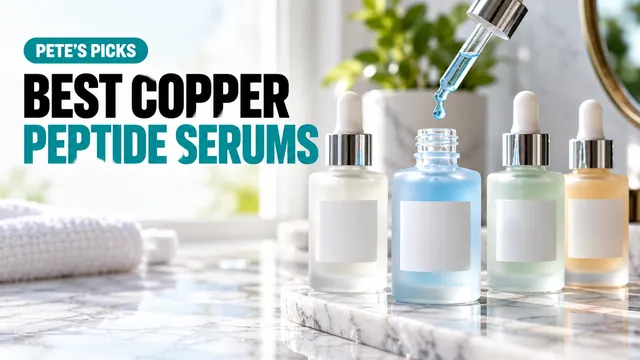
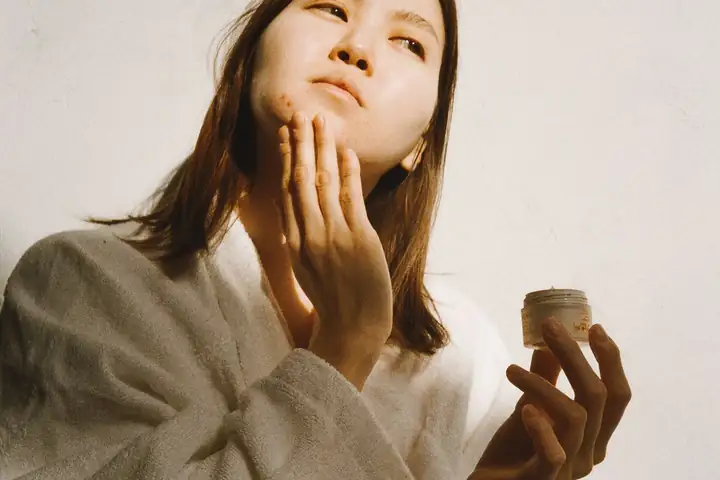
As a cosmetic. FDA does not approve cosmetics before they go on sale. Whether a product is a cosmetic or a drug depends on its intended use, judged by what the company claims. FDA gives claims to "restore hair growth" or "regenerate cells" as examples of drug claims (FDA, "Is it a cosmetic, a drug, or both?"). A copper peptide serum that promises to make skin look smoother is sold as a cosmetic. One that promises to regrow hair is making a drug claim. Copper peptide serums ranked by label disclosure.
For compounding. On May 14, 2026, FDA split GHK-Cu by route:
- GHK-Cu "except for injectable routes of administration" moved into 503A Category 1, the group of substances FDA is evaluating. Under FDA's interim policy, FDA generally does not intend to act against pharmacies that compound with Category 1 substances while the evaluation runs, if other conditions are met.
- Injectable GHK-Cu went onto FDA's list of substances "nominated but withdrawn" from Category 2. FDA's safety summary says compounded injectable GHK-Cu "may pose risk for immunogenicity due to the potential for aggregation and peptide-related impurities" (FDA 503A categories, May 14, 2026; FDA safety-risk page).
FDA has said it will take GHK-Cu to its Pharmacy Compounding Advisory Committee before the end of February 2027. An advisory vote is a recommendation. FDA makes the final call.
Canada
Injectable GHK-Cu. Health Canada's April 9, 2026 advisory lists GHK-Cu among unauthorized injectable peptide drugs it has seized. It says "peptides are generally regulated as prescription drugs" and that "For Research Use Only" labels do not make products legal (Health Canada).
 Read this next GHK-Cu research profile
On May 7, 2026, Health Canada posted a Type I recall, its most serious class, of GHK-Cu powder lots sold to pharmacies as unauthorized active ingredients (recall RA-82047).
Creams and serums. These are sold as cosmetics, which must be notified to Health Canada and meet the Cosmetic Regulations (Health Canada).
Other countries. We have not reviewed other regulators for this page.

Why GHK-Cu isn't approved
Approval needs controlled human trials showing a drug works and is safe for a specific use. For GHK-Cu, those trials are few and small:
- A gel helped diabetic foot ulcers close in one placebo-controlled trial (Mulder 1994).
- A cream did no better than placebo for leg ulcers in 86 people (Bishop 1992, PMID 1495150).
- A 13-person trial after laser resurfacing found no difference on objective measures (Miller 2006, PMID 16847171).
- No published human trial has tested it as an injection.
Money matters too. GHK is a natural molecule, which makes it hard to patent. A University of Washington researcher told NPR that human trials would need huge investment and "it's probably never going to get FDA approval" (NPR, Sep 7, 2026). That explains the missing trials. It says nothing for or against the peptide.
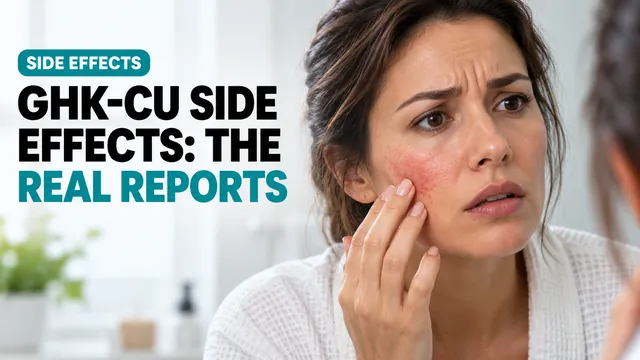
The full study-by-study record is on our GHK-Cu profile. Side effects people report, from welts to the "copper uglies," are covered in GHK-Cu side effects.
Status log
| Date | What changed | Source |
|---|---|---|
| Apr 9, 2026 | What changedHealth Canada names GHK-Cu among seized unauthorized injectable peptides | SourceHealth Canada advisory |
| May 7, 2026 | What changedHealth Canada Type I recall of GHK-Cu powder lots (RA-82047) | SourceHealth Canada |
| May 14, 2026 | What changedFDA splits GHK-Cu by route: non-injectable to Category 1; injectable to "nominated but withdrawn" | SourceFDA 503A categories |
| Sep 7, 2026 | What changedNPR reports on injectable copper peptides and clinician concerns | SourceNPR |
| By end of Feb 2027 | What changedFDA advisory committee review of GHK-Cu expected | SourceFDA |
We update this log when FDA or Health Canada changes something.
Copper peptides, the cosmetic way. If you are curious about copper peptides for skin, these are widely sold cosmetic serums that list GHK-Cu (copper tripeptide-1) as an ingredient. The skin evidence is thin and mixed, as described above, and some users report irritation. Patch-test first.
- The Ordinary Multi-Peptide + Copper Peptides 1% Serum, about $32 for 30 mL (check current price)
- NIOD Copper Amino Isolate Serum 3:1, about $62 for 15 mL (check current price)
We may earn a commission from these links. They are cosmetic products, not treatments, and listing them is not a recommendation to use any peptide.
Common questions
Is GHK-Cu FDA approved?
No. FDA has not approved GHK-Cu as a drug for any use. It is sold legally in creams and serums as a cosmetic ingredient, copper tripeptide-1.
Is GHK-Cu legal in the US?
As a cosmetic ingredient, yes, as long as the product makes no drug claims. Injectable GHK-Cu is not on FDA's lists of substances pharmacies may compound, and FDA has posted safety concerns about it.
Can a pharmacy compound GHK-Cu injections?
Injectable GHK-Cu is on FDA's "nominated but withdrawn" list, not in Category 1, as of October 10, 2026. Non-injectable GHK-Cu is in Category 1 while FDA evaluates it. FDA plans an advisory-committee review before the end of February 2027.
Is GHK-Cu legal in Canada?
Creams and serums are sold as cosmetics. Health Canada named injectable GHK-Cu among seized unauthorized peptide drugs in April 2026 and recalled GHK-Cu powder lots in May 2026.
Are copper peptide serums FDA approved?
No, because FDA does not approve cosmetics before sale. Serums are legal as long as they are marketed for appearance, not to treat a condition or regrow hair.
Why isn't GHK-Cu FDA approved?
No company has run the large human trials approval requires. The published trials are small and mixed, and as a natural molecule GHK-Cu is hard to patent, which limits the incentive to fund trials.
Is GHK-Cu safe to inject?
Unknown. No published human trial has tested injected GHK-Cu, and FDA flags possible immune reactions from impurities and clumping. See GHK-Cu side effects.
Sources, methodology, and changes
Methodology. Checked on 2026-10-10: FDA 503A bulk drug substance categories (May 14, 2026 update), FDA compounding safety-risk page, FDA cosmetic-versus-drug guidance, Health Canada advisories and recalls, PubMed for human trials of GHK-Cu, and NPR's September 2026 report.
Primary sources.
- FDA, 503A categories list, updated May 14, 2026: https://www.fda.gov/media/94155/download
- FDA, bulk drug substances that may present significant safety risks: https://www.fda.gov/drugs/human-drug-compounding/certain-bulk-drug-substances-use-compounding-may-present-significant-safety-risks
- FDA, "Is it a cosmetic, a drug, or both?": https://www.fda.gov/cosmetics/cosmetics-laws-regulations/it-cosmetic-drug-or-both-or-it-soap
- Health Canada advisory, Apr 9, 2026 (RA-81874); recall RA-82047, May 7, 2026
- Mulder GD et al., 1994: PMID 17147644; Bishop JB et al., 1992: PMID 1495150; Miller TR et al., 2006: PMID 16847171
- NPR, Sep 7, 2026: https://www.npr.org/2026/09/07/nx-s1-5955552/copper-peptides-skin-aging-health-safe
Changes. Oct 10, 2026: first published.