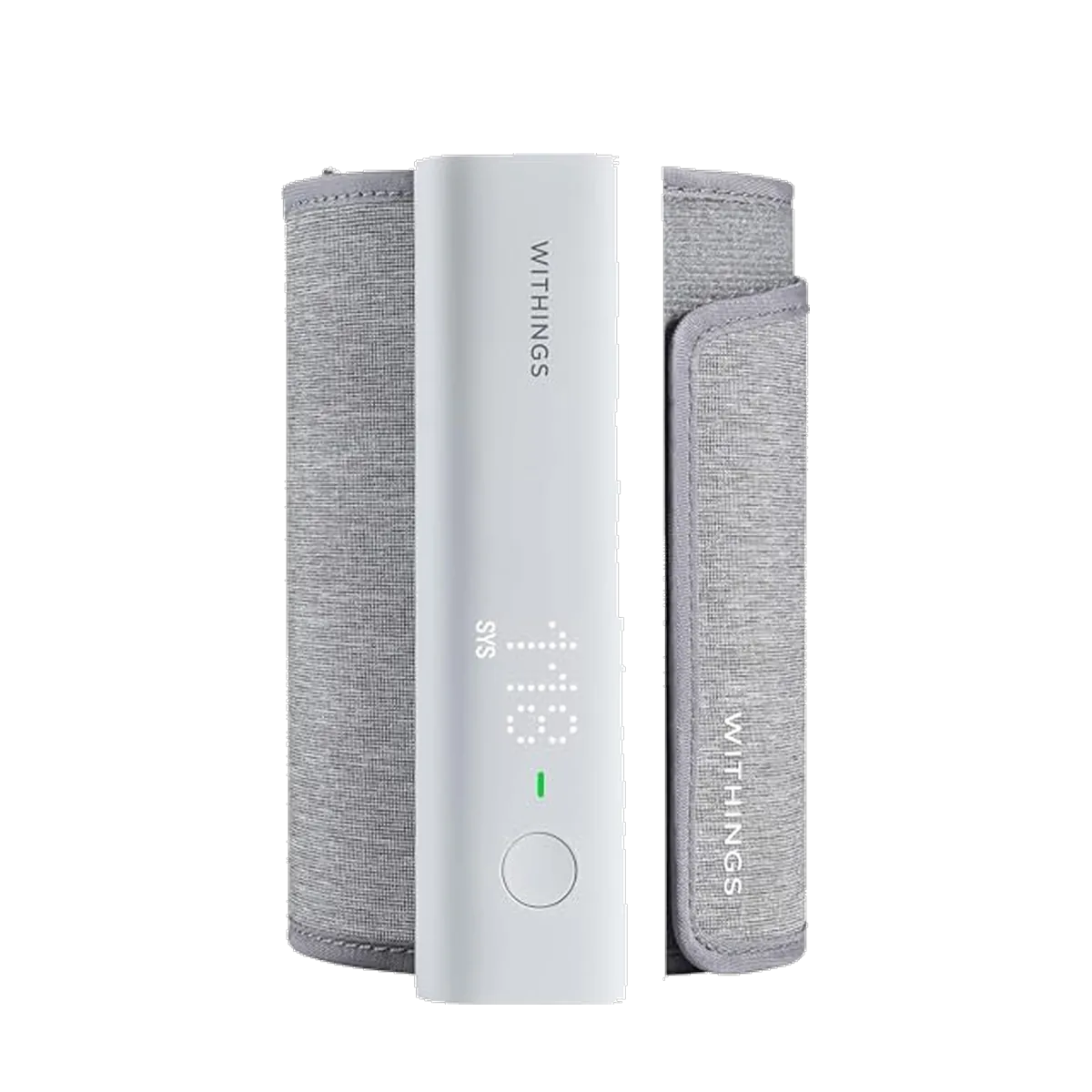

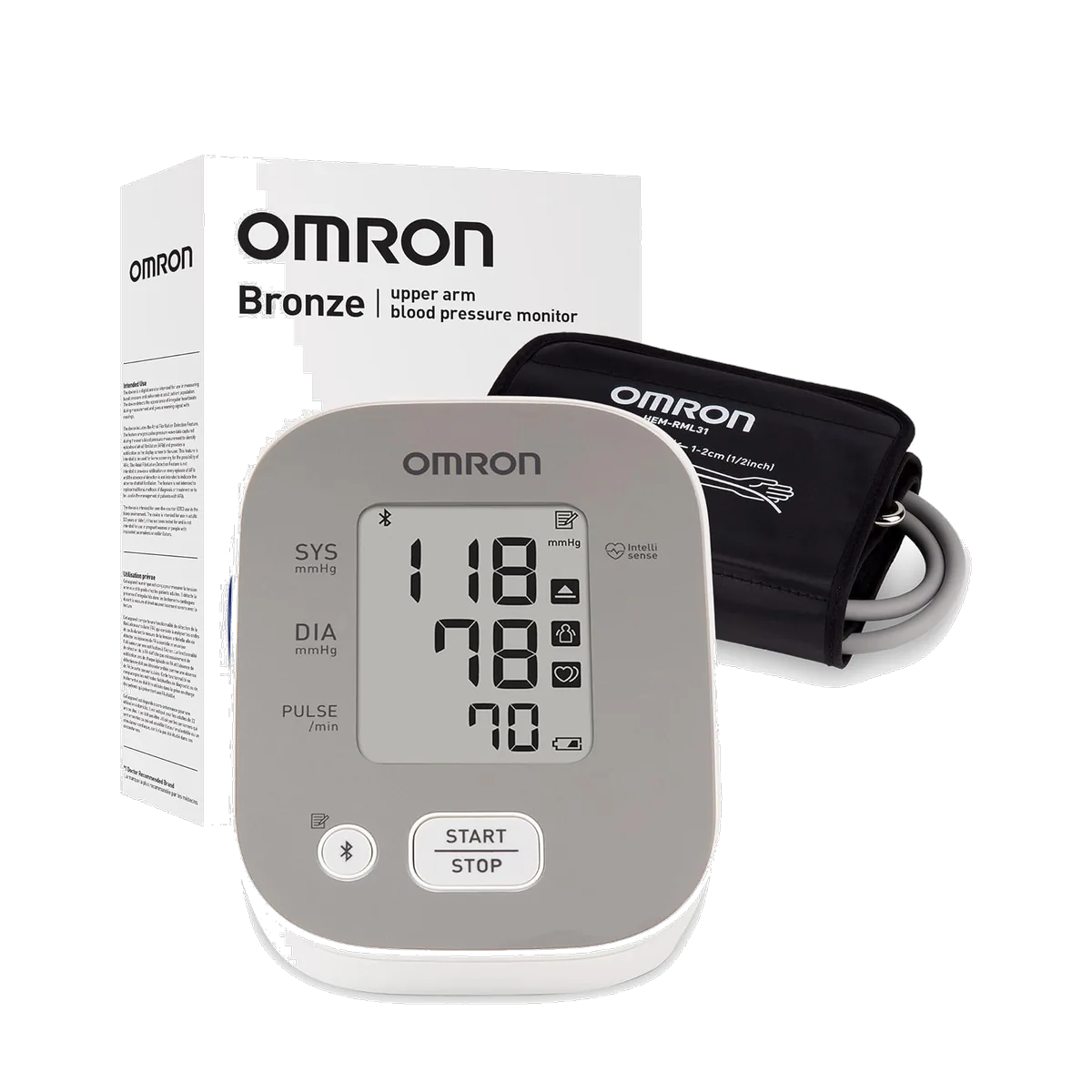
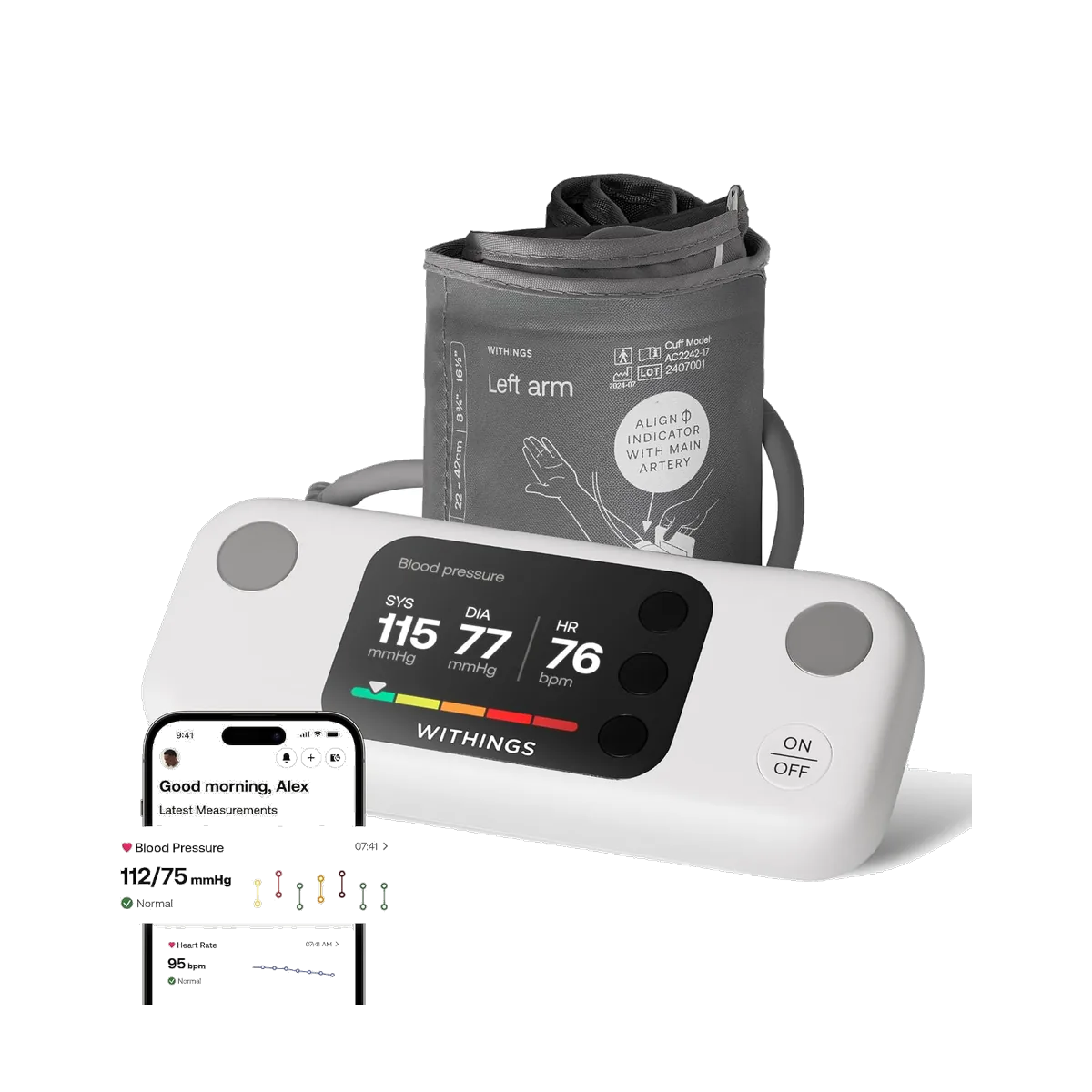


On this page
Why blood pressure comes up on a GLP-1
You lose weight on a GLP-1, and your doctor asks for home readings before touching your blood pressure meds.
In STEP 1, systolic pressure fell 6.16 mm Hg on semaglutide over 68 weeks, versus 1.06 mm Hg on placebo (Wilding 2021, PMID 33567185).
The trial write-up is on the semaglutide page. What happened after people stopped is in Stopping semaglutide.
If your numbers move like that, your prescriber needs a log they can trust. That's the job of the five monitors above.
How I picked these five
Six checks. If a monitor failed the upper-arm rule, it didn't make the list.
- Upper-arm cuff only. The American Heart Association advises against wrist and finger monitors.
- Validation checked on validatebp.org, model by model, then STRIDE BP.
- Cuff range on the listing. The Omron models here fit 9 to 17 in arms.
- A log you can show your prescriber, on the device or in the app.
- What the listing claims for irregular heartbeat or AFib. I wrote down a no when it doesn't claim one.
- Verified ratings, where Amazon shows a count.
I didn't bench-test these monitors. I compared the listings, the validation registries, and American Heart Association guidance.
Four things that throw off home readings
The cuff is half the job. The other half is the five minutes before you press the button.
 Read this next Stelo vs Lingo
These four are the ones I keep seeing in the studies, and in the texts people send me.
1. Wrong cuff size
Measure around your bare upper arm, midway between shoulder and elbow, then match the cuff.
In a randomized crossover trial, a regular cuff on someone who needed a large cuff read systolic 4.8 mm Hg high. On the extra-large arms it was 19.5 mm Hg high.
A regular cuff on someone who needed a small cuff read 3.6 mm Hg low (Ishigami et al., JAMA Intern Med 2023).
2. Arm position
Resting the arm on your lap read 3.9 mm Hg higher systolic than a supported desk position. Letting it hang at your side read 6.5 mm Hg higher (Liu et al., JAMA Intern Med 2024, PMID 39373998).
Arm on a table, cuff at heart level. I don't care how casual the couch looks.

3. Time of day
The American Heart Association says to measure at the same times each day. A lot of clinicians want a morning set, before meds and coffee, and an evening set.
Two readings, a minute apart. Log both. Don't keep the pretty number and throw out the ugly one.
Coffee before a reading is its own mess. If you're chasing fluids on a GLP-1, the electrolyte comparison is a separate page, and the wider topic lives under weight management.
4. White-coat effect
Some people read higher in the clinic than at home. The AHA scientific statement puts white-coat hypertension at 15 to 30% of people with high office readings, when out-of-office pressure is judged from awake or 24-hour measurements and the person isn't on blood pressure medicine (Muntner et al., Hypertension, 2019).
A home log helps your prescriber tell that apart from pressure that's high in both places. Masked hypertension is the reverse: fine in the office, high at home.
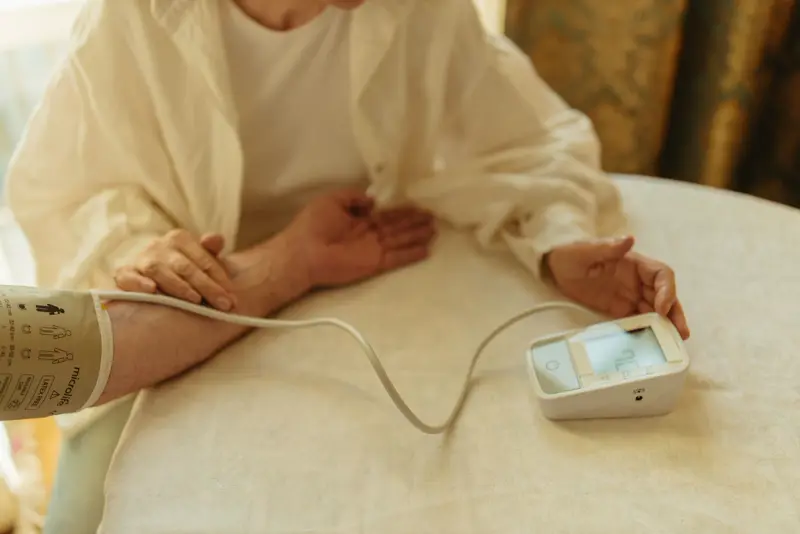
How to take a reading you can trust
From the American Heart Association's home measurement steps:
- No caffeine, smoking or exercise for 30 minutes before. Empty your bladder.
- Sit quietly for 5 minutes, back supported, feet flat, legs uncrossed.
- Rest your bare arm on a table at heart level, cuff right above the bend of the elbow.
- Don't talk. Take two readings one minute apart and record both.
- Measure at the same times each day, and share the log with your prescriber.
Common questions
What is the best home blood pressure monitor?
For most people, the Omron Silver (BP5255). It's an upper-arm monitor with a 9 to 17 inch cuff, irregular heartbeat detection, and the free Omron Connect app. It's listed on validatebp.org. It doesn't screen for AFib.
Omron or Withings: which is better?
Omron if you want a separate monitor, AA batteries, and a cuff you can watch go on. Withings if you want the pump built into the cuff and Wi-Fi sync. I didn't find a head-to-head trial of these exact models.
Are wrist blood pressure monitors accurate?
The American Heart Association recommends an automatic upper-arm cuff and doesn't recommend wrist or finger monitors for home use. They give less reliable readings.
What size cuff do I need?
Measure around the middle of your bare upper arm, midway between shoulder and elbow. The Omron cuffs here, and BPM Connect, fit 9 to 17 inches. The BPM Vision cuff in the box fits 8.7 to 16.5 inches. In the Ishigami trial, a cuff that was too small read high, and a cuff that was too large read low.
What does "validated" mean?
It means the monitor was tested against a standard protocol and an independent review passed it for that model. I check validatebp.org for the US list and stridebp.org for the international one. I don't count a brand's "clinically validated" stamp. I count the model number on the list.
Can a GLP-1 lower blood pressure?
In the STEP 1 trial, systolic pressure fell 6.16 mm Hg on semaglutide over 68 weeks, versus 1.06 mm Hg on placebo. Ask your prescriber whether to track yours at home. Don't change a blood pressure medicine because of a home log.
How often should I check my blood pressure at home?
Ask your prescriber. The American Heart Association suggests the same times each day, two readings one minute apart, with every result recorded.
Does AFib detection replace an ECG?
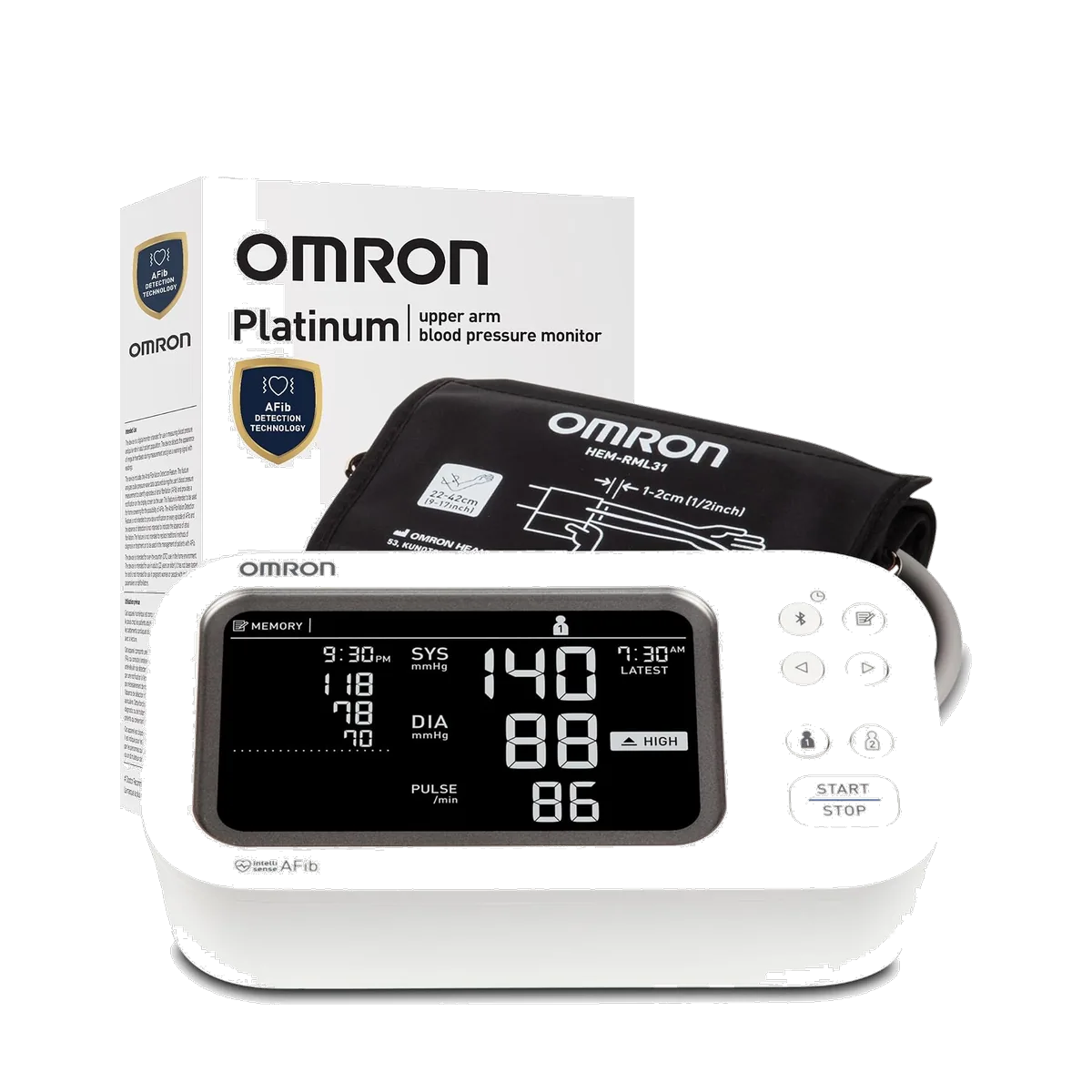
No. The Omron Platinum manual says the AFib screen isn't a diagnosis, and a quiet reading doesn't prove you're free of AFib. If it flags you, call your doctor.
If I could only buy one
If I could only buy one, it's the Omron Silver. It's the hardest of this set to put on wrong, and it's on validatebp.
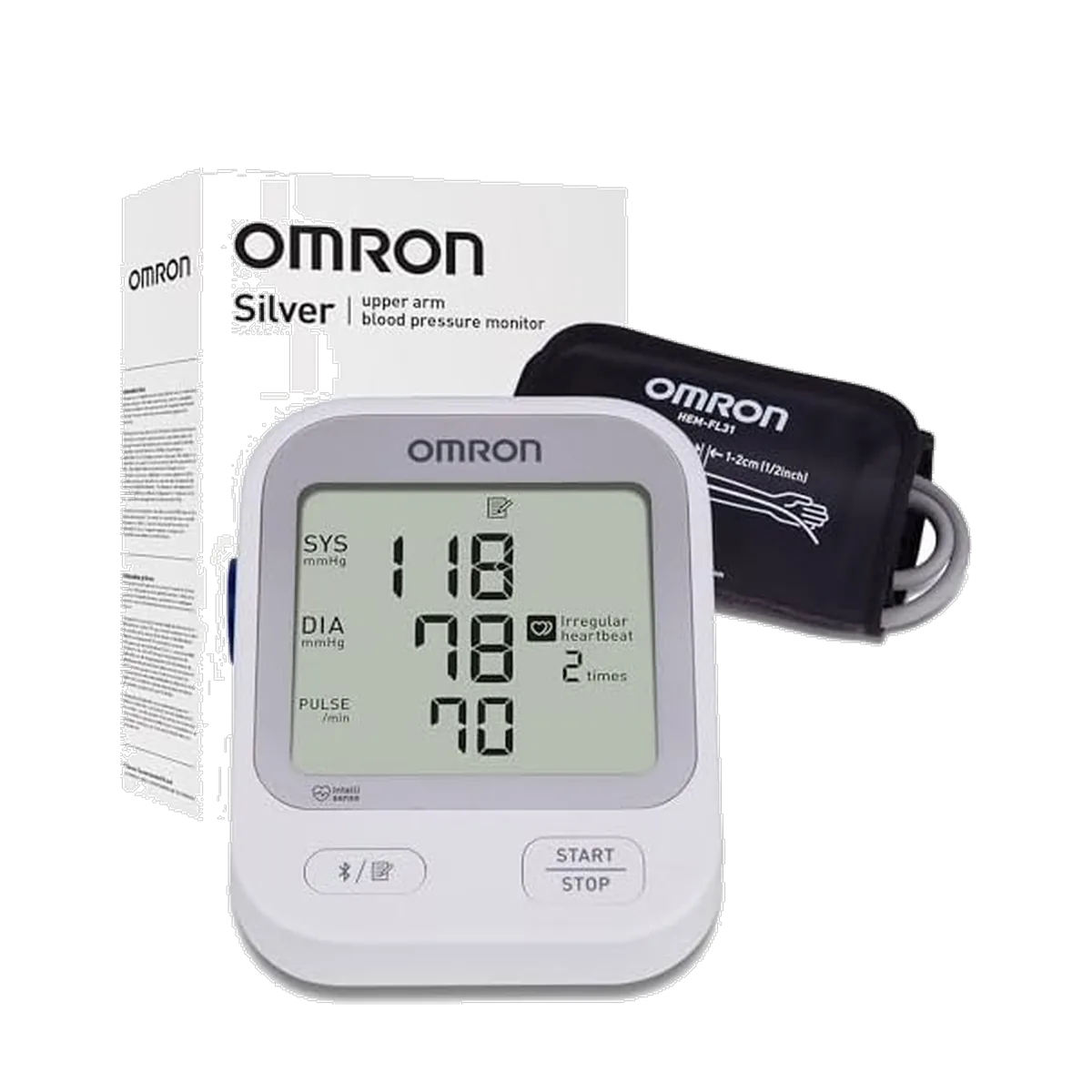
Best for most people: Omron Silver (BP5255)
Check Today's Price on AmazonAs an Amazon Associate, Straight Up Peptides earns from qualifying purchases.- If you share the cuff with a partner or want an AFib flag, get Omron Platinum (BP5465).
- If you hate tubes and will use the app, get Withings BPM Connect (WPM05).
What changed: Oct 16, 2026. Pete Scores now sit between 7.8 and 9.6. Same five monitors, no prices.
This page includes affiliate links. If you buy through them, we earn a commission at no extra cost to you. As an Amazon Associate, Straight Up Peptides earns from qualifying purchases.
Research information, not medical advice. A home monitor doesn't diagnose anything. Talk to your prescriber before changing any blood pressure medicine.
Sources, methodology, and changes
Methodology. On October 16, 2026 I matched each Amazon US listing to the model number printed on that listing: Omron Silver BP5255 (B0DDZP9R7T), Omron Platinum BP5465 (B0DXXLYZTL), Omron Bronze BP5150 (B0DD46HGC9), Withings BPM Connect WPM05 (B07SJV1HNR), Withings BPM Vision WPM07-08 (B0DYPDF3JD). I then checked those model numbers on validatebp.org and stridebp.org. Older retail names (BP5250, BP5450, BP5100) are different listings, so I didn't copy their registry lines onto these ASINs. Feature lines come from the Amazon listing, the Omron product page or manual, or the Withings product guide. I didn't bench-test any monitor. Ratings are the counts supplied for this page and labeled as of Oct 2026 on Amazon.
Primary sources.
- American Heart Association, Monitoring your blood pressure at home: https://www.heart.org/en/health-topics/high-blood-pressure/understanding-blood-pressure-readings/monitoring-your-blood-pressure-at-home
- Muntner P et al., Measurement of Blood Pressure in Humans: A Scientific Statement From the American Heart Association, Hypertension, 2019: https://www.ahajournals.org/doi/full/10.1161/HYP.0000000000000087 and https://pmc.ncbi.nlm.nih.gov/articles/PMC11409525/
- Wilding JPH et al., 2021, N Engl J Med. STEP 1: PMID 33567185
- Ishigami J et al., JAMA Intern Med, 2023. Cuff size: https://pmc.ncbi.nlm.nih.gov/articles/PMC10407761/
- Liu et al., JAMA Intern Med, 2024. Arm position: PMID 39373998
- US Validated Device Listing: https://www.validatebp.org/
- STRIDE BP: https://www.stridebp.org/
- Amazon US listings by ASIN, checked Oct 16, 2026, no prices recorded here: B0DDZP9R7T (Omron Silver BP5255), B0DXXLYZTL (Omron Platinum BP5465), B0DD46HGC9 (Omron Bronze BP5150), B07SJV1HNR (Withings BPM Connect WPM05), B0DYPDF3JD (Withings BPM Vision WPM07-08)
Changes. Oct 17, 2026: shortened the top of the page so the hero shows on a phone. Oct 16, 2026: redesigned, prices removed, validation and spec detail added. Oct 12, 2026: first published.
Spotted something we should check? Send us the source: /corrections/.