Retatrutide TRIUMPH trial results: what the Phase 3 program found
The retatrutide TRIUMPH trial results are the largest weight-loss numbers reported for any incretin-class drug in a Phase 3 obesity trial. In TRIUMPH-1, adults with obesity who did not have diabetes lost an average of 28.3% of body weight at the highest dose over 80 weeks. The type 2 diabetes trial, TRIUMPH-2, reported 20.8% at the same dose. TRIUMPH-3, in severe obesity with established cardiovascular disease, reported 22.6%. And TRIUMPH-4, in adults with obesity and knee osteoarthritis, reported 28.7% weight loss alongside substantial knee pain relief.
Those figures are real trial outcomes, and they are the largest averages this drug class has posted. They do not make retatrutide proven better than existing options. Every reported TRIUMPH result so far is retatrutide versus placebo, not versus another drug. The compound is investigational and unapproved. And the numbers come with statistical caveats that change how big they look.
This article walks through the TRIUMPH program trial by trial: what each study enrolled, what it found, what the side-effect signal looks like, and what the program has not answered.
What retatrutide is
Retatrutide is an investigational once-weekly drug developed by Eli Lilly that activates three hormone receptors at once: GIP, GLP-1, and glucagon. It is a first-in-class triple agonist. Semaglutide activates one receptor (GLP-1). Tirzepatide activates two (GLP-1 and GIP). Retatrutide adds the glucagon receptor as a third axis.
The rationale for the third target is energy expenditure. GLP-1 and GIP activation suppress appetite and improve blood-sugar control. Glucagon receptor activation is thought to raise energy expenditure and drive fat burning in the liver, which no approved obesity medication currently exploits. That is a design rationale, not a demonstrated mechanism in humans: the trials measured weight and symptoms, not the receptor-level contribution of each pathway.
The Phase 2 evidence came from Jastreboff and colleagues, published in the New England Journal of Medicine in 2023. The trial randomized 338 adults with obesity or overweight (body mass index of 27 or higher) and at least one weight-related complication, without diabetes, to one of six retatrutide dose regimens or placebo for 48 weeks. The primary outcome was weight change at 24 weeks. The highest dose reduced body weight by an average of 17.5%, versus 1.6% for placebo. At 48 weeks, the highest dose averaged 24.2% loss versus 2.1% for placebo, with a clear dose-response pattern. Notably, the weight-loss curve had not yet plateaued when the study ended, which is what justified longer Phase 3 trials.
The TRIUMPH program, trial by trial
The TRIUMPH program is a set of Phase 3 placebo-controlled trials testing retatrutide across obesity and its serious complications. Four readouts are public so far: TRIUMPH-1 in obesity without diabetes, TRIUMPH-2 in obesity with type 2 diabetes, TRIUMPH-3 in severe obesity with established cardiovascular disease, and TRIUMPH-4 in obesity with knee osteoarthritis. A dedicated cardiovascular and kidney outcomes trial, TRIUMPH-Outcomes, is still ongoing.
Two caveats apply to the whole program. First, every reported result so far is retatrutide versus placebo. No head-to-head trial against an approved weight-management drug has been published. Second, Lilly reported the efficacy estimand most prominently: the average effect among participants while on treatment. The treatment-regimen estimand, which counts everyone randomized regardless of adherence or dropout, gives smaller numbers. Both are legitimate analyses, but comparing one trial's efficacy number with another trial's treatment-regimen number mixes different things. This article leads with the efficacy-estimand figures for each trial and adds the treatment-regimen figures wherever Lilly announced them in detail.
TRIUMPH-1: 28.3% at 80 weeks in obesity without diabetes
TRIUMPH-1 (ClinicalTrials.gov ID NCT05929066) is the pivotal obesity trial. Its primary results were announced on May 21, 2026. The trial randomized 2,339 adults with obesity or overweight plus at least one weight-related condition, without diabetes, to retatrutide 4 mg, 9 mg, or 12 mg once weekly or placebo for 80 weeks, alongside diet and physical activity counseling. Participants were a high-severity cohort: mean baseline body mass index of 40.0 and mean weight of 112.7 kg.
On the efficacy estimand, mean weight loss at 80 weeks was 19.0% at 4 mg, 25.9% at 9 mg, and 28.3% at 12 mg, versus 2.2% for placebo. At the highest dose, that was an average of 70.3 pounds. 45.3% of participants on 12 mg lost at least 30% of body weight. 62.5% lost at least 25%, and 27.2% lost at least 35%.
The extension data extend the trend but come with a selection caveat. A 532-person subset with baseline body mass index of 35 or higher continued on the 12 mg dose to 104 weeks of total treatment and averaged 30.3% weight loss, or 85.0 pounds. Only participants who completed the main trial and tolerated the medication entered the extension, so this is a completers-and-tolerators group, not the full randomized cohort. Lilly reported that weight loss continued through 104 weeks without plateauing in this subgroup.
TRIUMPH-2: type 2 diabetes, published in The Lancet
TRIUMPH-2 (NCT05929079) is the only TRIUMPH readout so far with a full peer-reviewed publication. The trial randomized 1,152 adults with type 2 diabetes and obesity or overweight to retatrutide 4 mg, 9 mg, or 12 mg or placebo for 80 weeks. Baseline characteristics: mean body mass index of 38.2 and mean HbA1c of 7.71%. Detailed results were presented at the European Association for the Study of Diabetes meeting and published simultaneously in The Lancet on September 29, 2026.
On the efficacy estimand, weight fell by 12.7%, 19.1%, and 20.8% across the three doses, versus 4.0% on placebo. On the treatment-regimen estimand, the figures were 11.9%, 16.8%, and 18.8% versus 5.1%. The article states the efficacy numbers most often; the treatment-regimen numbers are the more conservative accounting of the same trial. Blood sugar fell by 1.4, 1.6, and 1.5 percentage points of HbA1c from baseline, versus 0.2 on placebo, and up to 40.0% of participants on the highest dose reached an HbA1c below 5.7%, which is in the normal range.
At the 12 mg dose, average weight loss was 49.6 pounds. Participants with a baseline body mass index of 35 or higher lost an average of 23.4%, or 60.8 pounds. By the end of the trial, 59.5% of participants on 12 mg no longer met the body mass index definition of obesity. Cardiometabolic markers moved with the weight: triglycerides fell 39.5%, non-HDL cholesterol fell 19.6%, and systolic blood pressure fell 10.8 mm Hg at the highest dose.
The diabetes number is smaller than TRIUMPH-1's 28.3%, but the two trials enrolled different populations. TRIUMPH-2 studied people with type 2 diabetes; TRIUMPH-1 excluded them. Comparing the two percentages as if they measure the same thing repeats the cross-trial error our semaglutide versus tirzepatide comparison warns against: different people, different programs, no shared population to stand on.

TRIUMPH-3: severe obesity with established cardiovascular disease
TRIUMPH-3 tested retatrutide in adults with severe obesity and established cardiovascular disease, with or without type 2 diabetes. Its topline results were announced alongside TRIUMPH-2 in July 2026. At the 12 mg dose, participants lost an average of 22.6% of body weight, or 55.8 pounds, at 80 weeks, versus 3.2% for placebo. The 9 mg dose averaged 21.6%. Lilly also reported improvements in triglycerides, blood pressure, and inflammatory markers.
On the question the trial's population raises, whether the drug reduces heart events, TRIUMPH-3 cannot answer. Major adverse cardiovascular events occurred less frequently than anticipated in both the retatrutide and placebo arms, leaving too few events to support conclusions about heart outcomes. That is why the dedicated outcomes trial matters: a weight-loss trial that is too short and too small for heart events is not a heart-outcomes trial, and no one should read it as one.
TRIUMPH-4: knee osteoarthritis, the pain result
TRIUMPH-4 (NCT05931367) was the first Phase 3 readout, announced on December 11, 2025, and it tested a different proposition: not just weight, but knee pain. The trial randomized 445 adults with obesity or overweight and knee osteoarthritis, without diabetes, 1:1:1 to retatrutide 9 mg, 12 mg, or placebo once weekly for 68 weeks. The population was severe: 84.0% had a baseline body mass index of 35 or higher, with mean baseline weight of 112.7 kg.
The trial had co-primary endpoints: percent weight change and knee pain on the WOMAC pain subscale at week 68. Retatrutide 12 mg reduced body weight by an average of 28.7% (71.2 pounds), and the 9 mg dose by 26.4%, versus 2.1% for placebo. Pain fell by an average of 4.4 points (74.3%) at 12 mg and 4.5 points (75.8%) at 9 mg, versus 2.4 points (40.3%) on placebo; those percentage changes were post-hoc calculations, not pre-specified endpoints. Physical function scores improved alongside pain: down 4.2 points (73.7%) at 12 mg versus 2.1 points (35.6%) on placebo. In a post-hoc analysis, 14.1% of participants on 9 mg and 12.0% on 12 mg were completely free from knee pain at 68 weeks, versus 4.2% on placebo.
Categorical results underline the scale: 39.4% of participants on 12 mg lost at least 30% of body weight versus 0.8% on placebo, and 67.7% achieved at least a 70% reduction in WOMAC pain versus 26.2% on placebo. Systolic blood pressure fell by 14.0 mm Hg at the highest dose.
The limit on interpretation is that the trial cannot separate the pain relief from the weight loss. Participants lost enormous weight and their knees hurt less. Whether retatrutide does anything for joints beyond unloading them is unanswered, and the population was specific: adults with severe obesity and knee osteoarthritis, not a general arthritis population.
Side effects and the dysesthesia signal
The common side effects match the incretin-class pattern: nausea, diarrhea, constipation, and vomiting, with more discontinuations at higher doses. In TRIUMPH-1, discontinuation because of adverse events was 4.1%, 6.9%, and 11.3% across the three doses versus 4.9% on placebo. In TRIUMPH-2, it was 4%, 12%, and 8% versus 5%.
The signal that does not match the familiar profile is dysesthesia: abnormal skin sensation, described as tingling or numbness. In TRIUMPH-1, it was reported in 5.1%, 12.3%, and 12.5% of participants across the three doses, versus 0.9% on placebo, rising with dose. In TRIUMPH-2, it occurred in about 4.5% to 7.3% on retatrutide versus roughly 1% on placebo. Reports describe most cases as mild to moderate, often resolving during treatment. A dose-related skin-sensation disturbance at ten times the placebo rate is unusual for this drug class, and how it is characterized in a future label matters for how patients and clinicians weigh the tradeoffs.
One more caution on the safety record: trials of this size and duration detect common side effects, not rare ones. The program's safety picture will not be complete until larger and longer exposures accumulate, and most of these numbers come from company topline announcements, not yet peer-reviewed publications.
What the TRIUMPH program has not answered
The open questions are as structured as the answers. There is no active comparator in any published result: every reported TRIUMPH readout compares retatrutide with placebo. A head-to-head trial against tirzepatide, TRIUMPH-5, is registered but has not reported results, so whether retatrutide outperforms an approved drug in a shared population is untested. There are no cardiovascular-outcomes data: the dedicated TRIUMPH-Outcomes trial, modeled on the outcomes trials for the approved drugs, is still ongoing. Long-term safety beyond the trial durations is unknown.
Retatrutide is investigational and unapproved. It is not available by prescription anywhere and can only be obtained in clinical trials. Lilly has said it plans to submit a Biologics License Application to the FDA in the first quarter of 2027, a timeline that moved back from an earlier target. Until a regulator reviews the full data package, the trial record is promising company-reported and peer-reviewed evidence, not an approved medicine.
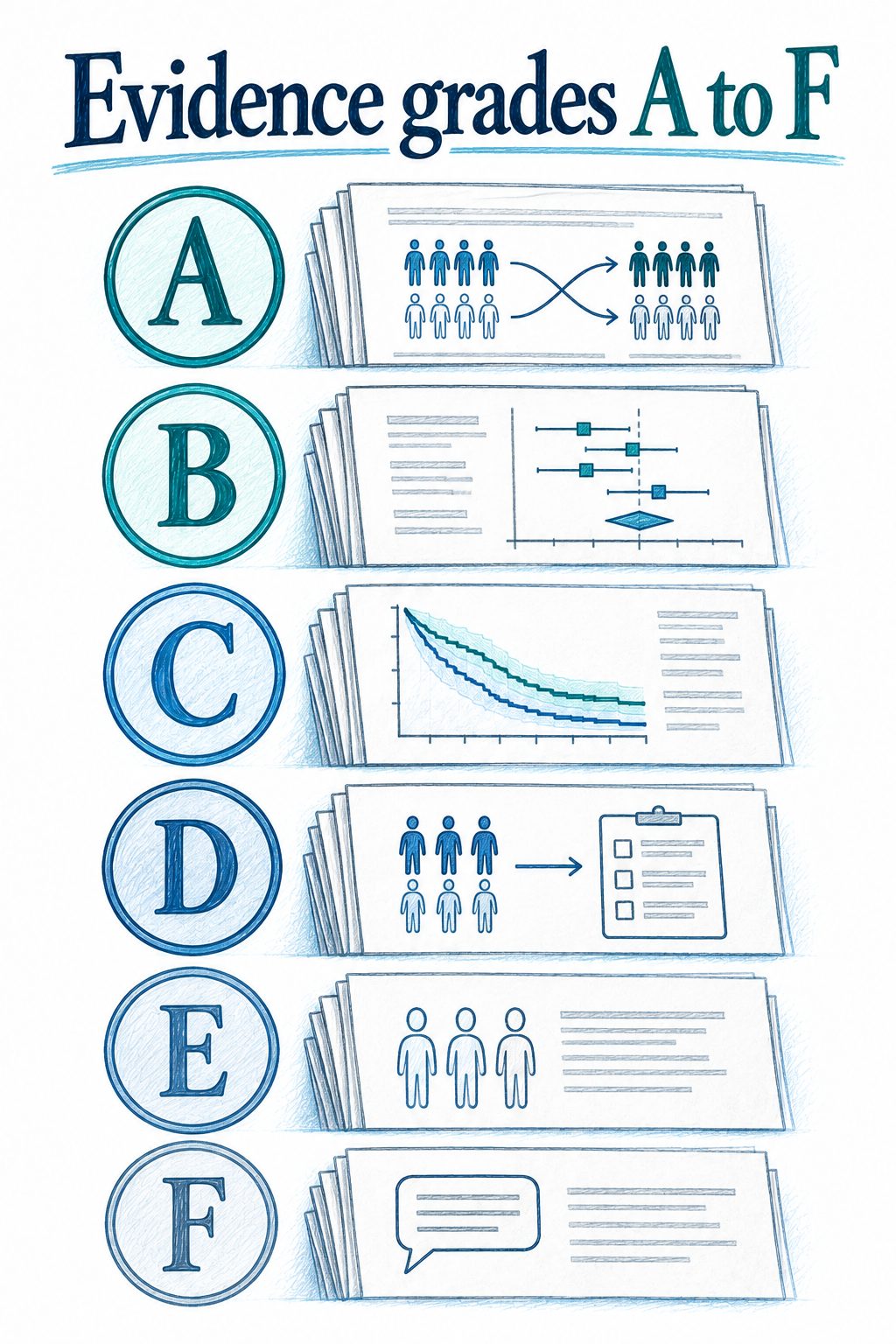
The evidence grade, and why
Applying the site's grading approach to each finding separately:
Weight loss in obesity without diabetes: moderate certainty. One large Phase 3 trial with a consistent dose-response, in line with Phase 2, but the primary readout is a company topline announcement, not yet a peer-reviewed publication. One trial means consistency across studies cannot yet be assessed.
Weight and glycemic control in type 2 diabetes: low certainty. TRIUMPH-2 was published in The Lancet, which strengthens reporting transparency, but it remains a single sponsor-run trial in this population with no independent replication, so consistency and publication-bias downgrades apply.
Knee pain reduction: low certainty. One trial, and pain is a subjective outcome where placebo itself improved scores by 40%. The effect cannot be separated from the very large weight loss in the same participants.
Cardiovascular outcomes: insufficient evidence. No outcomes trial has reported. TRIUMPH-3's event counts were too low to judge, and the dedicated outcomes trial is ongoing.
Safety beyond common side effects: low certainty for rare events. The dysesthesia signal is real and dose-related; the rare-event profile will need larger and longer exposure.
See how we rank peptides by evidence strength and the weight management research topic for where retatrutide's program fits alongside the approved drugs.
Bottom line
The TRIUMPH program has reported the largest average weight losses this drug class has shown in Phase 3: 28.3% in TRIUMPH-1, 20.8% in type 2 diabetes in TRIUMPH-2, 22.6% in severe obesity with cardiovascular disease in TRIUMPH-3, and 28.7% with knee pain relief in TRIUMPH-4.
What tempers the numbers: every comparison so far is against placebo, the efficacy-estimand framing flatters the topline figures, the cardiovascular question is unanswered, dysesthesia is a real dose-related signal, and the drug is investigational with an approval application planned for the first quarter of 2027.
That is the honest shape of the evidence: the strongest Phase 3 weight-loss numbers on record, in one sponsor's program, against placebo, with the hard comparisons still to come.
Sources
Jastreboff AM, et al. Triple-Hormone-Receptor Agonist Retatrutide for Obesity: A Phase 2 Trial. N Engl J Med. 2023. DOI: 10.1056/NEJMoa2301972. 338 adults, 48 weeks; highest dose 24.2% mean weight loss at 48 weeks versus 2.1% for placebo; curve not plateaued at study end.
Bellido V, le Roux CW, Ekinci EI, et al. Retatrutide in adults with obesity and type 2 diabetes (TRIUMPH-2): a double-blind, parallel-group, randomised, placebo-controlled, phase 3 trial. Lancet. Published online September 29, 2026. doi:10.1016/S0140-6736(26)01861-1. 1,152 adults, 80 weeks; efficacy estimand 12.7%, 19.1%, 20.8% versus 4.0% placebo; treatment-regimen estimand 11.9%, 16.8%, 18.8% versus 5.1%.
Eli Lilly and Company. Lilly's triple agonist, retatrutide, delivered weight loss of up to an average of 71.2 lbs along with substantial relief from osteoarthritis pain in first successful Phase 3 trial. Press release, December 11, 2025. TRIUMPH-4: 445 adults, 68 weeks, 9 mg 26.4% and 12 mg 28.7% weight loss; WOMAC pain down 4.5 points (75.8%) at 9 mg and 4.4 points (74.3%) at 12 mg (post-hoc percentage calculations).
Eli Lilly and Company. Retatrutide delivers bariatric-level weight loss in pivotal Phase 3 TRIUMPH-1 trial. Topline announcement, May 21, 2026. TRIUMPH-1: 2,339 adults, 80 weeks, 12 mg 28.3% mean weight loss; 104-week extension subset averaged 30.3%.
Eli Lilly and Company. Lilly's triple agonist, retatrutide, successful in two additional Phase 3 obesity trials, delivering significant improvements in weight and A1C. Topline announcement, July 2026. TRIUMPH-3: severe obesity with established cardiovascular disease, 12 mg 22.6% (55.8 lb) versus 3.2% placebo at 80 weeks; Lilly plans Biologics License Application to FDA in Q1 2027.
ClinicalTrials.gov: NCT05929066 (TRIUMPH-1), NCT05929079 (TRIUMPH-2), NCT05931367 (TRIUMPH-4). Registry records confirm trial designs and populations; registration is not a results paper.
Keep reading
- Semaglutide vs tirzepatide: what the head-to-head trial found The one direct head-to-head trial, and why the separate trial programs cannot be compared directly.
- Semaglutide research profile Every conclusion with its supporting studies, graded by evidence strength.
- Weight management research The full trial record behind the weight-loss drugs, evidence graded.
- Peptides ranked by evidence strength Our compound profiles ordered by how strong the human evidence is.